Treatment in New York
Toenail fungus, medically known as onychomycosis, is a common condition that causes thickened, discolored, and often uncomfortable nails. Traditional treatments such as topical creams and oral medications can be slow to work and aren’t always effective—especially in persistent or moderate cases. In response, many podiatry clinics across New York now offer laser therapy, a modern, non-invasive option designed to target the fungal infection directly with focused light energy.
Laser treatment uses specialized FDA-cleared technology to penetrate the nail and disrupt the environment where fungus thrives, without harming surrounding skin or tissue. The procedure is typically quick, well-tolerated, and requires minimal downtime, making it appealing for patients seeking an alternative to long courses of medication or messy topical applications.
While outcomes vary depending on the laser type and infection severity, many New Yorkers choose laser therapy for its convenience and potential to significantly improve nail appearance and health. Treatment is usually performed by board-certified podiatrists or foot care specialists in clinics throughout the city.
Whether you’re interested in pain-free sessions or looking for options that fit your schedule and lifestyle, New York hosts a range of providers specializing in this cutting-edge onychomycosis care—from targeted laser centers to comprehensive podiatry practices.
Different Types of Toenail Fungus Infections
Toenail fungus infections, medically known as onychomycosis, can develop in several different forms. Each type uniquely affects the nail and may vary in appearance, severity, and response to treatment. Identifying the type of infection is an important step toward choosing the most effective care.
The most common type is distal subungual onychomycosis. This infection begins at the tip or sides of the nail and gradually spreads underneath the nail plate. It often causes yellow or white discoloration, thickening, crumbling edges, and nail separation from the nail bed. This type is frequently associated with athlete’s foot and spreads slowly over time.
Another form is white superficial onychomycosis, which affects the surface of the nail rather than underneath it. It appears as white, chalky patches that may spread across the nail plate. The nail surface can become rough, soft, and powdery if left untreated. This type is usually easier to treat when caught early because the infection remains on the outer nail layer.
Proximal subungual onychomycosis is less common and typically starts near the cuticle area. The fungus moves outward as the nail grows, causing discoloration close to the nail base. This form may be more common in people with weakened immune systems and can progress quickly without proper care.
Another type, candida onychomycosis, is caused by yeast rather than dermatophyte fungi. It often affects fingernails but can also involve toenails, especially in people whose feet are frequently exposed to moisture. Symptoms may include swelling, redness around the nail, nail thickening, and color changes. Understanding the specific type of toenail fungus can help guide treatment decisions and improve long-term nail health.
Toenail Fungus Symptoms
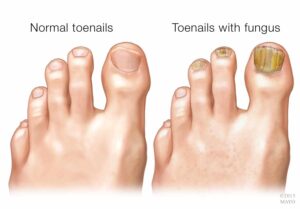
Toenail fungus symptoms often develop slowly and may be easy to overlook in the early stages. One of the first noticeable signs is a change in nail color. The nail may appear white, yellow, brown, or slightly green as the infection progresses. Discoloration usually starts at the tip or edge of the nail and spreads over time.
As the infection advances, the nail commonly becomes thicker and harder to trim. The surface may look rough, brittle, or crumbly, and debris can build up underneath the nail. Some people notice the nail lifting or separating from the nail bed, which can cause discomfort and make wearing shoes painful.
Texture changes are also common with toenail fungus. The nail may lose its natural shine and become dull or misshapen. In some cases, the nail may develop ridges or uneven growth. A foul or musty odor can occur when fungal debris accumulates beneath the nail.
In more severe cases, toenail fungus can lead to tenderness, inflammation, or pain, especially when pressure is applied. Surrounding skin may appear irritated or flaky. Recognizing these symptoms early allows for timely treatment, which can help prevent the infection from spreading and reduce long-term nail damage.
Toenail Fungus vs. Sports
Toenail fungus is commonly associated with sports and athletic activities due to the conditions athletes are often exposed to. Warm, moist environments created by tight athletic shoes and sweaty socks allow fungi to thrive. Repeated foot moisture combined with limited airflow makes it easier for fungal organisms to infect the toenails.
Athletes are also at higher risk because of frequent use of communal areas. Locker rooms, public showers, and pool decks can harbor fungi on damp surfaces. Walking barefoot in these spaces increases the chance of exposure. Minor cuts, blisters, or nail trauma from sports further raise the risk by allowing fungi to enter the nail.
Certain sports place extra stress on the toenails. Activities like running, soccer, basketball, and tennis involve repetitive impact and sudden stops. This trauma can cause micro-injuries to the nail, weakening its natural barrier. Once damaged, the nail becomes more vulnerable to fungal infection and is slow to heal.
Preventive habits are especially important for active individuals. Keeping feet clean and dry, changing socks promptly, and wearing breathable footwear can reduce risk. Showering immediately after workouts and avoiding shared footwear also helps limit exposure. Addressing early signs of toenail fungus allows athletes to maintain foot health and continue performing comfortably.
Toenail Fungus Laser Treatment in New York
If you have caught nail fungus, it can be easily treated using the FDA-approved PinPointe laser, which typically only takes one treatment. Other treatments, like topical solutions and oral medication, are not as effective. Topical solutions have a very low cure rate. This is because the solution does not penetrate all the way through the nail bed. Oral medication has a higher cure rate than topicals, but our nail doctors do not recommend it. This is because it can lead to liver toxicity. You would need to have consistent blood tests throughout the course of taking the medication.
Our nail doctor in New York, NY, recommends this treatment for toenail fungus. The PinPointe Laser treatment has the highest cure rate in the market. It has no side effects and no recovery period. As a result, you can go about your daily activities right after the treatment. Also, there’s no pain.
If you have any signs of nail fungus, call us at 800-672-0625 at our New York, NY location, or visit our website for more information on our doctors at one of our over 150 locations.
Fun things to do in New York
New York City offers endless fun for every interest and lifestyle. Visitors can explore iconic landmarks like Times Square, Central Park, and the Statue of Liberty. Broadway shows, live music venues, and world-class museums provide unforgettable entertainment. Food lovers can enjoy diverse cuisine from street carts to Michelin-starred restaurants. Neighborhoods like SoHo, Brooklyn, and Harlem offer shopping, art, and cultural experiences that make every visit unique.