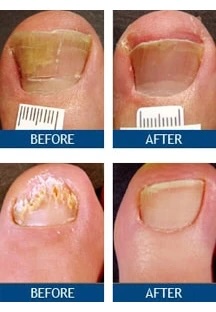
Why Nail Fungus Takes Time to Treat
One of the most common questions people ask after being diagnosed with toenail fungus is: “How long will treatment take?” The truth is that nail fungus doesn’t disappear overnight. Because nails grow slowly and the infection lives under the infected nails, understanding the nail fungus treatment timeline is key to setting realistic expectations and staying committed to treatment.
In this guide, we’ll walk you through what typically happens from diagnosis to clear, healthy nail growth and why patience is an important part of success.
Toenail fungus thrives under the nails, deep in the nail bed. Unlike skin infections, the fungus isn’t easily accessible. In addition:
-
Toenails grow very slowly
-
Thickened nails block topical treatments
-
Fungus can survive deep within the nail
-
Visible improvement depends on new nail growth
Because of this, even the most effective treatments work gradually, not instantly.
Stage 1: Diagnosis & Evaluation (Week 0)
The nail fungus treatment timeline begins with a professional diagnosis and a doctor’s evaluation.
During this stage, your doctor will:
-
Examine the appearance of your nails
-
Confirm whether fungus is present (and rule out trauma or psoriasis)
-
Assess how many nails are affected
-
Determine severity and nail thickness
-
Recommend the most appropriate treatment plan
This step is important because treating the wrong condition can delay results.
Stage 2: Treatment (Weeks 1-4)
You’ll need to decide which treatment is the most appropriate for you. And usually doctors will recommend one of the following treatment options:
Topical Medication Treatment
-
Applied daily for several months
-
Best for very mild infections
-
Limited penetration through thick nails
Oral Antifungal Pills
-
Typically taken for several weeks or months
-
Can be effective, but may require blood monitoring
- Have severe side effects
-
Not suitable for everyone
Toenail Fungus Laser Treatment
-
Usually completed in one short, in-office session
-
Targets the fungus directly under the nail
-
No downtime or recovery period
-
Pain-free
At this stage, most patients do not see immediate visual improvement, which is normal. Patients have to wait until their nails grow out to see significant results.
Stage 3: Early Changes (Months 1-3)
During the first few months of the nail fungus treatment timeline, subtle changes may occur.
You may notice:
-
Slight reduction in discoloration near the cuticle
-
Less debris under the nails
-
Nails are becoming easier to trim
-
Reduced odor or crumbling
However, the infected portion of the nail is still present. This phase is about stopping the fungus, not yet full cosmetic improvement.
Stage 4: Visible Improvement (Months 3-6)
As a healthy nail continues to grow from the base:
-
A clear nail becomes more visible
-
The line between a healthy and an infected nail is easier to see
-
Thickness may gradually decrease
-
Nail shape begins to normalize
This is often when patients feel encouraged because progress is finally noticeable.
Stage 5: Nail Grows Out (Months 6-12)
Toenails take a long time to fully grow out.
For most people:
-
A full toenail replacement can take 9-12 months
-
Severe infections may take longer
-
Fingernails grow faster than toenails
During this stage, consistent aftercare is essential to prevent reinfection while the nail continues to grow out.
How to Safely Speed Up Results
While you can’t force nails to grow faster, you can support better results:
-
Keep feet clean and dry
-
Disinfect shoes regularly
-
Wear breathable socks and footwear
-
Avoid walking barefoot in public areas
-
Follow all post-treatment-care instructions
-
Trim nails properly and regularly
-
Treat athlete’s foot promptly
When combined with effective treatment, these steps help protect progress.
Why Laser Treatment Often Shortens the Timeline
Laser therapy doesn’t make nails grow faster, but it can:
-
More effectively stop fungal growth from spreading
-
Reduce the chance of recurrence
-
Improve the quality of new nail growth
-
Avoid interruptions caused by medication side effects
For many patients, this leads to cleaner results with fewer setbacks during the overall timeline.
Common Myths About Nail Fungus Treatment
“If the nail isn’t clear in a few weeks, treatment didn’t work.”
→ False. Nail growth takes months, sometimes even up to a year.
“Home remedies should work faster.”
→ False. They rarely reach the infection.
“Once the nail looks better, I can stop aftercare.”
→ False. Reinfection can happen at any time, and some people tend to be more prone to getting fungal infections.
Bottom Line: Patience Is Part of the Cure
The nail fungus treatment timeline requires commitment and realistic expectations. While treatment stops the fungus early, visible improvement depends on healthy nail growth over time. With the right treatment plan and proper aftercare, most patients see steady progress and lasting results.
Ready to Start Your Treatment Timeline?
At Laser Nail Therapy, we help patients understand exactly what to expect during the course of their treatment. From the first visit, to clear, healthy nails.
📞 Call (800) 672-0625 or schedule your FREE consultation with one of our doctors near you to begin your personalized nail fungus treatment plan.