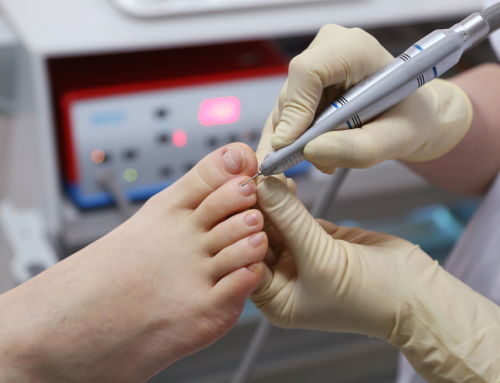
A Toenail Fungus Infection
Toenail fungus can be a frustrating, stubborn, and surprisingly difficult infection to treat. What may begin as a small white or yellow spot can gradually turn into a thick, brittle, discolored nail that becomes difficult to trim and embarrassing to show. For many people, the biggest frustration with having toenail fungus is trying treatment after treatment without seeing any improvement.
Fortunately, there are several treatment options for toenail fungus, including oral medications, topical antifungal treatments, and laser therapy. Among laser options, the PinPointe FootLaser is specifically designed to treat a toenail fungus infection and is available at Laser Nail Therapy.
Laser treatment offers an approach that does not require oral antifungal medication. However, it is important to understand how the laser treatment works, what results to expect, and why preventing reinfection is just as important as treating the existing toenail fungus.
Laser treatment is the better alternative with its potential advantages, how it compares with other toenail fungus treatments, why common home remedies may not be enough, and what you can do after treatment to protect your nails.
What Is Toenail Fungus?
Toenail fungus, medically known as onychomycosis, is a fungal infection involving the toenail and the nail bed. It is much more common in toenails than fingernails because feet spend a great deal of time inside warm, enclosed shoes where moisture and limited airflow can create an environment that fungi thrive in.
Common symptoms to look out for include:
- Yellow, white, brown, or discolored nails
- Thickened toenails
- Brittle or crumbly nails
- Debris underneath the nail
- Nails that separate from the nail bed
- Changes in nail shape
- Difficulty trimming the nail
- Occasionally, discomfort or pain from pressure inside shoes
According to the American Academy of Dermatology, nail fungus generally does not simply disappear on its own. It can also spread to other nails or coexist with athlete’s foot. Importantly, other conditions, including nail trauma and psoriasis, can sometimes look similar to the toenail fungus infection. This is why an appropriate evaluation is important before starting treatment, and at Laser Nail Therapy we offer a free consultation with our foot doctors.
Once toenail fungus infection is in or beneath the nail, treatment can be difficult. The hard nail plate can make it difficult for topical medication to reach the affected areas. On the other hand, oral medications expose the entire body to an antifungal drug and can lead to other complications depending on your medical history.
This is one reason many patients consider laser treatment.
Why Is Toenail Fungus So Difficult to Treat?
Toenail fungus is not simply sitting on top of the nail like dirt. The fungal organisms can live within and underneath the nail on the nail bed. This makes it more difficult to treat.
Another challenge is nail growth.
Even when the toenail fungus infection has been successfully treated, the damaged portion of the toenail does not suddenly become normal. Instead, the infected nail has to grow out while the new nail replaces it. The toenails can take between six and nine months to fully grow out.
That means patients sometimes make the mistake of assuming a treatment has failed because the nail still looks discolored several weeks after treatment. You should focus on seeing the new nail growth and ensuring the new nail is clear and healthy.
The visible nail is essentially a record of what happened to it previously. If the infection is treated today, the damaged nail still has to grow forward and be replaced by a healthier nail.
This is why patience and consistent aftercare are important parts of toenail fungus treatment.
How Does the PinPointe Laser Work?
The PinPointe FootLaser uses focused laser energy that passes through the toenail. The treatment is performed externally, meaning the nail is not removed.
Unlike a cream or nail lacquer that must be applied repeatedly and penetrate the nail, laser energy is delivered directly across the nail plate and underneath the nail bed.
The PinPointe device has FDA clearance, and clinical data submitted to the FDA supported its use for treating a toenail fungus infection.
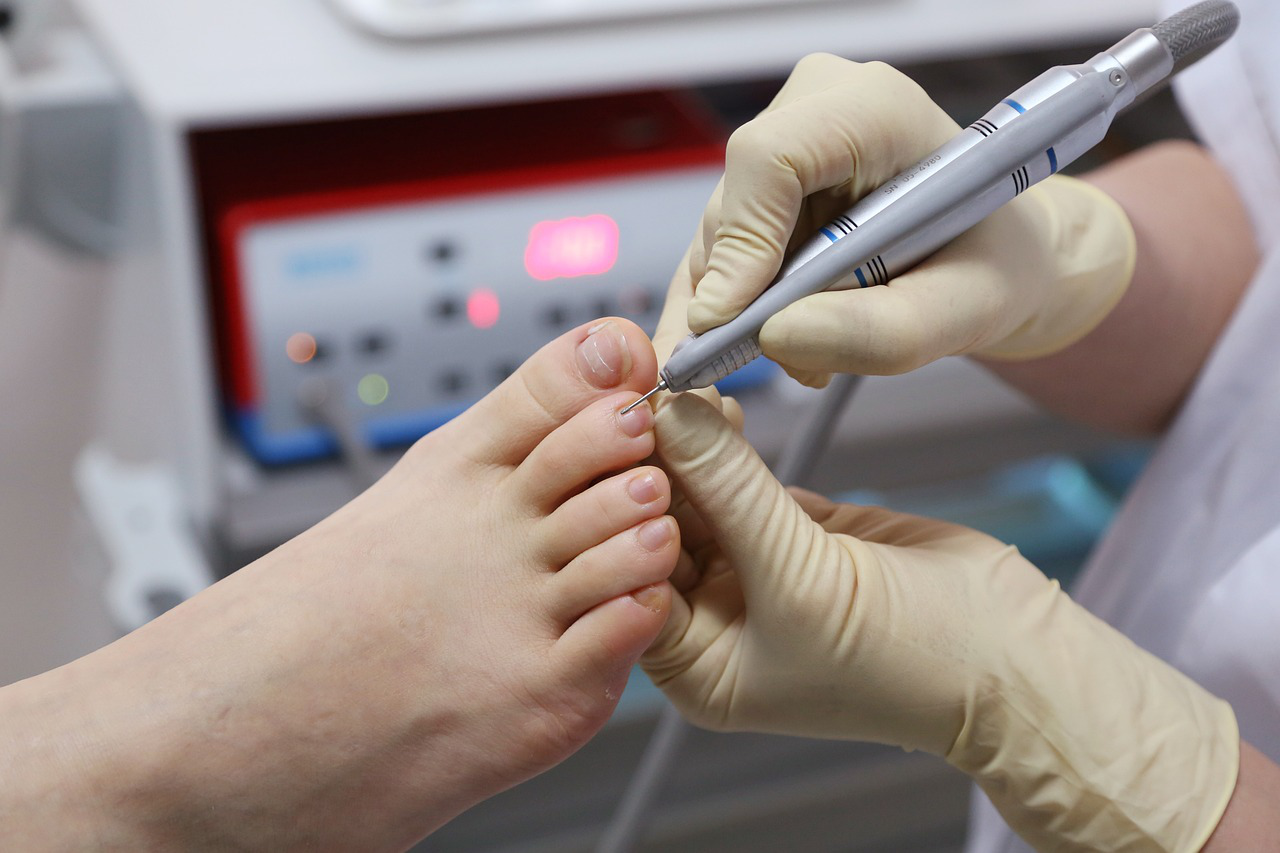
What Happens During a PinPointe Laser Treatment?
One of the great things about laser treatment for toenail fungus is that it is performed in an office.
A typical treatment process includes:
- Nail evaluation: The first step is determining whether the nail changes are actually consistent with a toenail fungus infection. A thick or yellow nail is not automatically proof of toenail fungus. Trauma, psoriasis, and other nail conditions can create similar changes.
- Preparing the nails: Patients may be instructed to remove nail polish and other nail coverings before treatment. Keeping the nail clean and accessible allows the foot doctor to properly examine and treat the affected area.
- Laser treatment: The foot doctor performs the laser treatment across the nails according to the treatment protocol. Laser Nail Therapy states that most patients experience just a slight warming sensation. The laser treatment is painless.
- Returning to normal activities: One of the advantages of a laser treatment is that there is no recovery period. You can resume normal activities right after treatment.
- Waiting for new nail growth: The most important part happens after leaving the office. The existing damaged nail does not immediately transform into a clear nail. Instead, a healthier-looking nail must grow from the nail root and gradually replace the affected portion.
Pros of Laser Treatment for Toenail Fungus
There are several reasons patients consider PinPointe laser treatment instead of traditional approaches.
- No oral antifungal medication is required: One of the biggest advantages for patients who want to avoid medication is that laser treatment is performed externally. Oral antifungal medications such as terbinafine can be effective, but they are prescription medications with potential side effects. The American Academy of Dermatology notes that liver testing is required with terbinafine because liver toxicity is a possible side effect. The laser treatment approach avoids exposing the entire body to an oral antifungal medication.
- No lengthy daily application routine: Some topical medications require daily application for many months. For example, prescription efinaconazole, tavaborole, and ciclopirox are applied directly to affected nails over extended periods of time. Efinaconazole and tavaborole are generally used daily for approximately 48 weeks, while ciclopirox also requires consistent application and periodic removal of the medication. For patients who struggle with daily medication routines, a one-time laser treatment may be more convenient.
- No surgical nail removal: Laser treatment does not require the toenail to be surgically removed. Nail removal may occasionally be appropriate in severe or resistant cases, but it is not a cure for the toenail fungus infection. Laser treatment allows the existing nail to remain intact.
- Minimal downtime: Patients generally do not need to schedule days away from work or normal activities following the procedure. Laser Nail Therapy describes the laser treatment as a procedure without a recovery period. You can return to your daily activities right after.
- No anesthesia is necessary: Unlike surgical procedures, laser treatment does not require local anesthesia. This can make the treatment experience simpler and more convenient. There is no pain. You just feel a slight warming sensation.
- Treatment is performed in an office: Rather than remembering to apply medication every night for nearly a year, patients receive treatment from a foot doctor during an office visit. This can be convenient for people who have a busy schedule.
- The nail does not have to be removed: Because the laser can be applied through the nail, there is no need to routinely remove the nail simply to access the affected area, the nail bed.
- Can be part of a broader prevention strategy: Laser treatment should not be viewed as the end of the process. Even after successful laser treatment, fungal infections can return. A prevention plan, like keeping feet dry, treating athlete’s foot, protecting feet in communal areas, and maintaining clean footwear, can help reduce the risk of reinfection.
Limitations of Laser Treatment
Although laser treatment has appealing advantages, it is important to consider its limitations.
- It is not an instant cosmetic fix: A laser treatment does not immediately turn a yellow or thickened toenail clear. The damaged portion of the nail remains until it grows out. It can take between six and nine months to see full results.
- Results can vary: Not every patient will have the same response. The severity of infection, number of nails affected, nail thickness, overall nail health, reinfection exposure, and dedication to aftercare can all influence the outcome.
- Reinfection is possible: Treating the existing infection does not make someone permanently immune to toenail fungus. Fungi can remain in shoes, socks, shared showers, locker rooms, and other environments. Without prevention, a person can become infected again.
How Does Laser Treatment Compare With Other Toenail Fungus Treatments?
Laser treatment is only one option. Understanding the alternatives can help patients make an informed decision. It is important to know the benefits and limitations of other treatment options. Laser treatment has the highest cure rate of all other treatment options.

Oral Antifungal Medication
Oral antifungal medication is one of the most established medical treatments for toenail fungus.
Terbinafine is commonly prescribed for toenail fungus infections and is generally taken for several weeks. It can be highly effective, and reviews generally consider oral medication more effective than topical medication.
Advantages
- Strong evidence for effectiveness
- Shorter treatment duration than many topical medications
- Works systemically rather than relying on penetration through the nail
Disadvantages
- Requires prescription
- Potential drug interactions
- Potential for increased underlying health complications
- Liver toxicity
- Repeated blood tests through treatment course
For patients who want to avoid systemic medication, laser treatment may be a safer alternative.
Topical Medication
Topical medications include efinaconazole, tavaborole, and ciclopirox.
These treatments can be appropriate for some patients, particularly those with mild or moderate infections. However, they require consistent application over a long period. And sometimes there are little to no results.
Why don’t topical medications work?
The problem is not necessarily that topical medications are ineffective.
The challenge is penetration and adherence.
The medication has to reach the affected area underneath the nail on the nail bed. Additionally, the patient has to apply it consistently for months.
Skipping applications can reduce the chance of success. Thickened nails can also make treatment more difficult.
For patients who prefer a procedure rather than putting on a daily medication, laser treatment provides a different approach.
Over-the-Counter Antifungal Creams
A common misconception is that an over-the-counter terbinafine cream designed for athlete’s foot will also cure toenail fungus.
The American Academy of Dermatology specifically explains that nonprescription terbinafine cream used for skin infections does not penetrate the nail sufficiently to treat nail fungus. So this treatment option will not work.
This does not mean treating athlete’s foot is unimportant. In fact, athlete’s foot can spread to the toenails, so treating a fungal skin infection is an important part of preventing or managing nail fungus.
Nail Debridement
Debridement involves reducing the thickness of an infected nail by trimming, filing, or removing excess nail material.
It can make the nail more comfortable and can improve the ability of topical medications to penetrate.
However, debridement alone does not eliminate the toenail fungus infection. The nail debridement is just a step in other treatment options that can be useful alongside. Think of it as reducing the physical barrier rather than necessarily eliminating the underlying cause.
Toenail Removal
In severe cases, partial or complete nail removal may be suggested. While removing the infected nail can provide access to the nail bed area and sometimes relieve pain, it is more invasive than laser treatment.
The major disadvantage is that the toenail must grow back, and complete toenail regrowth can take between six and nine months. You would still need to treat the nail bed with a treatment option, as the toenail fungus infection is not limited to just the nail. If the nail bed isn’t treated, the nail removal can be completely useless.
Home Remedies
Tea tree oil, vinegar, Vicks VapoRub ointments, mouthwash, and other household remedies are frequently promoted online as treatments for toenail fungus.
The problem is that well-known or popular remedies are not the same as reliable, clinical treatment options.
Why home remedies often don’t work
The underlying issue is that toenail fungus is difficult to reach. Applying an ingredient to the surface of a thick, infected nail does not deliver enough of the remedy to the deeper infected areas.
Clinical evidence that a substance can inhibit fungus also does not automatically mean that applying that substance to a human toenail will cure an established infection. In other words, “kills fungus in a laboratory” does not necessarily mean “cures toenail fungus in a person.”
Home remedies may also delay professional diagnosis and treatment, allowing the nail to become more extensively damaged.
What Results Should You Expect After Laser Treatment?
Your toenail will not become instantly clear after laser treatment. Instead, look for gradual changes as the nail grows.
You may eventually notice a clearer band of nail growing from the base. Over time, that clear growth can move toward the tip as the old damaged nail grows out. The process can take several months, typically between six and nine months, to fully grow out.
This is completely different from treating a superficial skin problem where the appearance can change within days. Toenail treatment requires patience.
Post-Treatment Care After PinPointe Laser Treatment
After treatment, preventing reinfection is one of the most important things you can do.
Laser Nail Therapy recommends antifungal measures such as antifungal creams, antifungal solutions, and antifungal shoe spray as part of its approach to reducing reinfection.
Other important prevention measures include:
- Keep Your Feet Dry: Fungus thrives in warm, moist environments. After showering, dry your feet thoroughly, especially between your toes. If your feet sweat heavily, change socks during the day.
- Wear Clean Socks: Put on a clean pair of socks every day. If your socks become damp from sweat or exercise, change them. Moisture-wicking socks can help reduce dampness.
- Rotate Your Shoes: Avoid wearing the same damp shoes repeatedly. Give footwear time to dry completely before wearing it again. The American Academy of Dermatology recommends allowing shoes approximately 24 hours to dry before wearing them again.
- Disinfect or Replace Problematic Footwear: Shoes worn during an active fungal infection can potentially contribute to reinfection. We can recommend disinfecting shoes or replacing footwear worn before treatment and washing socks appropriately.
- Use Antifungal Shoe Products When Appropriate: Antifungal powders or sprays can help prevent fungal growth in shoes, although they are not a substitute for treating a toenail fungus infection.
- Wear Shower Shoes in Public Areas: Wear flip-flops or shower sandals in places like gyms, locker rooms, public showers, spas, and pools. Walking barefoot in warm, damp public environments increases exposure to a toenail fungus infection.
- Keep Toenails Trimmed: Keep toenails short and trim them straight across. Avoid cutting too deeply into the corners, which can increase the risk of injury. If your nails are extremely thick, difficult to trim, or painful, professional nail care may be safer than aggressive cutting at home.
- Do Not Share Nail Tools: Never share nail clippers, files, towels, socks, or shoes with someone who has a toenail fungus infection. Fungal organisms can spread through contaminated personal items.
- Treat Athlete’s Foot: Athlete’s foot and toenail fungus are closely connected. If you have itchy, peeling, cracked skin between your toes, do not ignore it. Treating athlete’s foot can help reduce the opportunity for fungus to spread to your toenails.
Can Toenail Fungus Come Back After Laser Treatment?
Yes. This is one of the most important facts patients should understand. Treating an existing fungal infection does not prevent future exposure.
You can successfully improve a nail and then encounter the same types of fungi again through sweaty footwear, communal showers, locker rooms, contaminated nail tools, or athlete’s foot. A nail fungus can recur even a year or more after clearing. That is why prevention should be considered part of treatment rather than an optional extra.
Think of treatment as two steps:
Step One: Address the Existing Infection
This may involve laser treatment, oral medication, topical medication, debridement, or a combination of approaches.
Step Two: Prevent Reinfection
- Keep feet dry.
- Protect feet in public areas.
- Treat athlete’s foot.
- Keep shoes clean and dry.
- Use clean nail tools.
- Maintain good nail hygiene.
The first step addresses the problem you have. The second step helps prevent the problem from returning.
Laser Treatment in San Francisco
As you can see, tips for healthy feet without nail fungus can be easy to find. If you have caught nail fungus, it can be easily treated using the FDA-approved PinPointe laser. It typically only takes one treatment. Other treatments, like topical solutions and oral medication, are not as effective. Topical solutions have a very low cure rate. This is because the solution does not penetrate all the way through the nail bed. Oral medication is not recommended by our nail doctors. This is because it can lead to liver toxicity. You would need to have consistent blood tests throughout the course of taking the medication.
Our nail doctor in San Francisco, CA, recommends this treatment for toenail fungus. The PinPointe Laser treatment has the highest cure rate in the market. It has no side effects and no recovery period. As a result, you can go about your daily activities right after the treatment. Also, there’s no pain.
If you have any signs of nail fungus, call us at (800) 672-0625 at our San Francisco, CA location. Visit our website for more information on our doctors at one of our over 150 locations.
Fun Things to Do in San Francisco
San Francisco is one of California’s most exciting destinations, offering a combination of iconic landmarks, beautiful scenery, fascinating neighborhoods, outdoor activities, and unforgettable food. There is no shortage of fun things to do in San Francisco.
Walk Across the Golden Gate Bridge
No trip to San Francisco is complete without seeing the Golden Gate Bridge. Visitors can walk across the pedestrian walkway or bike across the bridge while enjoying spectacular views of San Francisco Bay, the city skyline, and the Pacific Ocean. The bridge stretches 1.7 miles across the Golden Gate and is one of the city’s most recognizable landmarks.
For the best experience, bring a jacket because San Francisco’s famous fog and strong winds can make the bridge surprisingly chilly.
Visit Alcatraz Island
For history lovers, Alcatraz Island is one of San Francisco’s most memorable attractions. The former federal prison, often called “The Rock,” sits in the middle of San Francisco Bay and is now part of the National Park Service.
Visitors can explore the historic prison buildings, hear stories about former inmates and guards, and enjoy impressive views of the city from the island. Reservations are highly recommended because Alcatraz tours are extremely popular.
Explore Golden Gate Park
Golden Gate Park is an excellent place to spend an afternoon outdoors. Covering more than 1,000 acres, the park includes gardens, museums, walking paths, lakes, and recreational areas.
Visitors can explore the Japanese Tea Garden, visit the de Young Museum, enjoy the San Francisco Botanical Garden, or simply have a picnic. The park’s JFK Promenade is also a great place for walking, biking, and enjoying the scenery.
See the Sea Lions at Pier 39
Head to Fisherman’s Wharf and make your way to Pier 39 to watch San Francisco’s famous sea lions. These playful animals can often be seen lounging on the docks while visitors watch from the waterfront.
Fisherman’s Wharf also offers restaurants, shops, attractions, bay cruises, and beautiful waterfront views, making it easy to spend several hours exploring the area.
Ride a Historic Cable Car
Riding a San Francisco cable car is another classic experience. These historic vehicles climb and descend the city’s steep hills while providing a fun way to see neighborhoods and landmarks. Popular routes connect areas such as Fisherman’s Wharf, Lombard Street, and Ghirardelli Square.
Discover San Francisco’s Neighborhoods
San Francisco is filled with distinctive neighborhoods worth exploring. Walk through Chinatown, enjoy Italian food and cafés in North Beach, experience the colorful history of Haight-Ashbury, or explore the Castro.
Each neighborhood has its own personality, architecture, restaurants, shops, and cultural attractions.
Enjoy the Outdoors
If you enjoy hiking and scenic views, San Francisco offers plenty of options. Lands End, Baker Beach, the Presidio, and the Golden Gate National Recreation Area provide opportunities for walking, photography, and enjoying the coastline. The National Park Service also highlights biking across the Golden Gate Bridge and hiking along the area’s many trails.
Experience San Francisco’s Food Scene
Don’t leave San Francisco without trying some local favorites. Grab a bowl of clam chowder served in a sourdough bread bowl at Fisherman’s Wharf, sample dim sum in Chinatown, enjoy Italian food in North Beach, or explore the restaurants and food vendors around the Ferry Building.
From iconic attractions to hidden neighborhood gems, San Francisco offers something for almost every type of traveler. Whether you want outdoor adventure, history, culture, great food, or simply incredible views, the City by the Bay is a destination that can keep you entertained throughout your visit.