Affects of Aging
The human body moves through predictable physiological changes as it ages. Skin loses elasticity, bone density decreases, and metabolic processes slow down. One of the most visible yet frequently overlooked manifestations of aging occurs within the nail unit.
For older populations, changes in nail structure, composition, and growth rates are not merely cosmetic concerns. These shifts alter how the body defends against external pathogens. They directly increase susceptibility to chronic conditions like onychomycosis (fungal nail infections).
Understanding the relationship among aging, keratin production, and fluctuations in nail growth is vital to modern podiatric care. This comprehensive guide explores the science of aging nails. It examines why traditional treatments often fail older populations and explains advanced modalities like laser nail treatment.
1. The Biology of Keratin and the Nail Matrix
To understand how aging affects the nails, one must first understand the anatomy of the nail unit and its main building block: keratin.
What is Keratin?
Nails are not solid pieces of dead tissue. They are complex, hardened structures made of epithelial cells. The primary structural makeup of the nail plate is keratin. To elaborate, this is a tough, fibrous protein also found in human hair and the outer layer of skin.
The keratin in nails is primarily “hard” alpha-keratin. It contains high amounts of sulfur-rich amino acids, particularly cysteine. These cysteine molecules form disulfide bonds. These bonds act as chemical anchors that link protein chains together, giving the nail plate its characteristic hardness, stability, and resistance to mechanical trauma.
The Role of the Nail Matrix
The visible nail plate is produced by the nail matrix. This is a specialized layer of mitotic cells located beneath the proximal nail fold. The matrix acts as the “factory” for the nail:
- Cell Division: Matrix cells constantly divide and multiply.
- Differentiation: As new cells form, they push older cells forward.
- Keratinization: These older cells build up vast amounts of keratin over time, lose their nuclei, flatten, and die.
- Hardening: The flattened, dead cells fuse into tightly packed, translucent layers that form the visible nail plate.
A healthy, young nail matrix produces a smooth, even, and relatively rapid stream of keratinized cells, resulting in a strong, flexible, and clear nail plate.

2. How Aging Alters Nail Growth Rates
However, as the human body ages, systemic cellular processes begin to decelerate. In other words, the systemic cellular processes begin to slow down. The nail unit is highly sensitive to these metabolic and circulatory changes.
The Deceleration of Growth
Study data shows that fingernail and toenail growth rates peak in early adulthood (between ages 20 and 30). After this peak, the rate of nail growth declines steadily. On average, nail growth rates decrease by approximately 0.5% to 1% per year after age 30.
By the time an individual reaches their 60s or 70s, their nails grow 30% to 50% slower than they did in their youth. While a healthy young adult might replace an entire toenail in 9 to 12 months, an older adult may need 18 to 24 months for the same process.
Why Growth Rates Slow Down
This age-related decline in growth is enabled by several interrelated physiological factors:
- Decreased Microcirculation: Peripheral blood flow naturally decreases as someone becomes older. Reduced capillary perfusion to the extremities means the nail matrix receives fewer nutrients, minerals, and oxygen molecules necessary for rapid cell division.
- Slower Cellular Proliferation: The mitotic activity within the nail matrix slows down. In order to create new layers of the nail plate, basal cells take longer to divide, prolonging the time period required to create new layers of the nail plate.
- Metabolic Shifts: Global metabolic rates drop in older demographics, directly impacting protein synthesis and cellular turnover throughout the entire integumentary system.
3. Structural and Chemical Mutations in Aging Keratin
The slowdown in growth velocity is often accompanied by significant changes in the chemical structure and physical characteristics of the keratin itself.
Alterations in Keratin Composition
In older adults, the nail matrix often struggles to synthesize a uniform arrangement of keratin proteins. The lipid content within the nail plate decreases, and water-binding capacity drops. Healthy young nails consist of roughly 7% to 12% water; in geriatric populations, water content can plummet significantly, leading to chronic brittleness.
Furthermore, the delicate balance of trace elements—such as zinc, iron, and calcium—within the keratin matrix shifts. The structural arrangement of disulfide bonds can become disorganized, leading to areas of localized weakness or excessive hardening.
Common Physical Transformations
These biochemical shifts manifest in several distinct clinical presentations:
- Onychorrhexis: Longitudinal ridging and splitting caused by the vertical thinning of the nail matrix and uneven keratin distribution.
- Onychauxis: Pathological thickening of the nail. Slower forward growth causes keratin cells to pile upward instead of advancing horizontally.
- Discoloration: Yellowing, graying, or opacity driven by the accumulation of cellular debris, altered lipid ratios, and prolonged environmental exposure.
- Increased Brittleness: Easy cracking, chipping, and layering resulting from the loss of natural moisture and intracellular lipids that normally bind keratin layers.
4. The Pathological Intersection: Slower Growth and Fungal Susceptibility
The age-related deceleration of nail growth is more than an inconvenience; it is a major pathological gateway. Specifically, it directly increases the risk of developing onychomycosis (chronic fungal nail infections).
The “Growth vs. Invasion” Race
An infection can manifest when dermatophytes, yeasts, or non-dermatophyte molds invade the nail bed or nail plate. In a healthy young adult, the nail plate grows outward at a velocity that often outpaces the forward march of the fungal hyphae. The body literally “grows out” the infection before it can establish a deep, permanent foothold in the proximal nail unit.
In older adults, this defensive equilibrium is broken:
- The fungal pathogen invades the distal edge of the nail.
- Because the nail’s outward growth velocity is severely reduced, the fungus easily outpaces the growth of the nail.
- The pathogen migrates proximally toward the nail matrix, establishing a deeply entrenched, chronic infection.
Prolonged Exposure Window
Slower growth means that any given segment of the nail plate remains exposed to the environment for twice as long as a younger nail. Over months and years, micro-traumas—such as friction from footwear or minor stubbed toes—create microscopic fissures in the brittle, dry keratin. These cracks serve as ideal entry portals for fungal spores.
Age-Related Comorbidities
The structural decline of keratin does not happen in a vacuum. It is compounded by other age-related health challenges:
- Peripheral Arterial Disease (PAD): Restricts the delivery of immune cells to the toes, limiting the body’s ability to fight off localized fungal invasions.
- Diabetic Neuropathy: Reduced sensation prevents older patients from feeling early micro-trauma or structural changes, allowing infections to progress unnoticed.
- Immune Senescence: Natural, age-related declines in immune function leave the body less equipped to suppress fungal overgrowth.
5. Limitations of Conventional Therapies in Older Demographics
Managing fungal nail infections in older patients using traditional methods presents significant clinical hurdles. The physiological changes in aging keratin directly undermine the efficacy of both topical and oral medications.
The Topical Failure Rate
Topical antifungal lacquers or solutions require deep penetration through the nail plate to reach the underlying nail bed where the fungus thrives.
However, the thickened, hyper-keratinized, and dehydrated nail plates characteristic of older adults act as highly effective physical barriers. The medication cannot easily diffuse through dense layers of disorganized keratin.
Furthermore, because topicals must be applied daily until a completely clean nail grows out, older patients face an extended treatment timeline of 18 to 24 months due to slow growth rates. This prolonged timeline frequently leads to poor patient compliance.
The Risks of Oral Systemic Medications
Oral antifungal medications, such as terbinafine or itraconazole, are absorbed systemically and delivered to the nail unit via the bloodstream. While more effective than topicals, they carry distinct risks for older populations:
- Hepatotoxicity: Oral antifungals require processing by the liver. Older adults frequently exhibit reduced hepatic function, increasing the risk of drug-induced liver injury.
- Polypharmacy Interventions: Geriatric patients are often prescribed multiple medications for cardiovascular health, hypertension, or diabetes. Oral antifungals interact with a wide range of common drugs, complicating treatment safety.
- Impaired Peripheral Circulation: If an older patient suffers from poor circulation, the oral medication cannot efficiently reach the distal digits in therapeutic concentrations.
6. Laser Nail Therapy: A Targeted Solution for Aging Nails
Given the structural barriers of aging keratin and the systemic risks of oral medications, advanced laser nail therapy has emerged as a highly viable alternative for older demographic groups.
How Laser Treatment Works
Laser nail treatment utilizes specific wavelengths of light—most commonly near-infrared wavelengths like 1064nm Nd:YAG lasers—to penetrate the solid nail plate.
The laser energy passes through the hard, thickened keratin layers without damaging the surrounding skin or nail matrix. When the light energy reaches the infected nail bed, it is absorbed by the fungal pigments and cellular structures.
This interaction operates via two primary mechanisms:
- Photothermal Destruction: The laser heats the fungal cells to temperatures that denature essential proteins and enzymes, effectively killing the pathogen or halting its reproduction.
- Photochemical Stimulation: Low-level light energy can stimulate localized microcirculation and metabolic activity in the surrounding tissue, supporting the body’s natural healing response.
Why Laser Treatment Benefits Aging Patient Profiles
- Bypasses the Keratin Barrier: Unlike topical creams, laser energy is not blocked by dense, thickened, or dehydrated keratin. It penetrates the entire depth of the nail plate instantly.
- Zero Systemic Toxicity: Laser treatments are entirely localized. There is no systemic absorption, meaning there is zero risk of liver damage and no possibility of dangerous drug interactions.
- Pain-Free and Non-Invasive: Most modern laser protocols cause only a mild, temporary warming sensation. This is highly advantageous for patients with fragile skin or peripheral neuropathies.
- Accommodates Slow Growth Dynamics: While a laser treatment does not instantly accelerate nail growth back to youthful levels, it sterilizes the existing nail unit. This ensures that the slow-moving nail matrix can gradually produce clean, uninfected keratin without constant reinvasion by active fungi.
7. Clinical Considerations and Management Protocols
Successfully treating older patients requires a tailored clinical protocol that accounts for the realities of aging keratin and slower growth rates.
Step 1: Professional Debridement
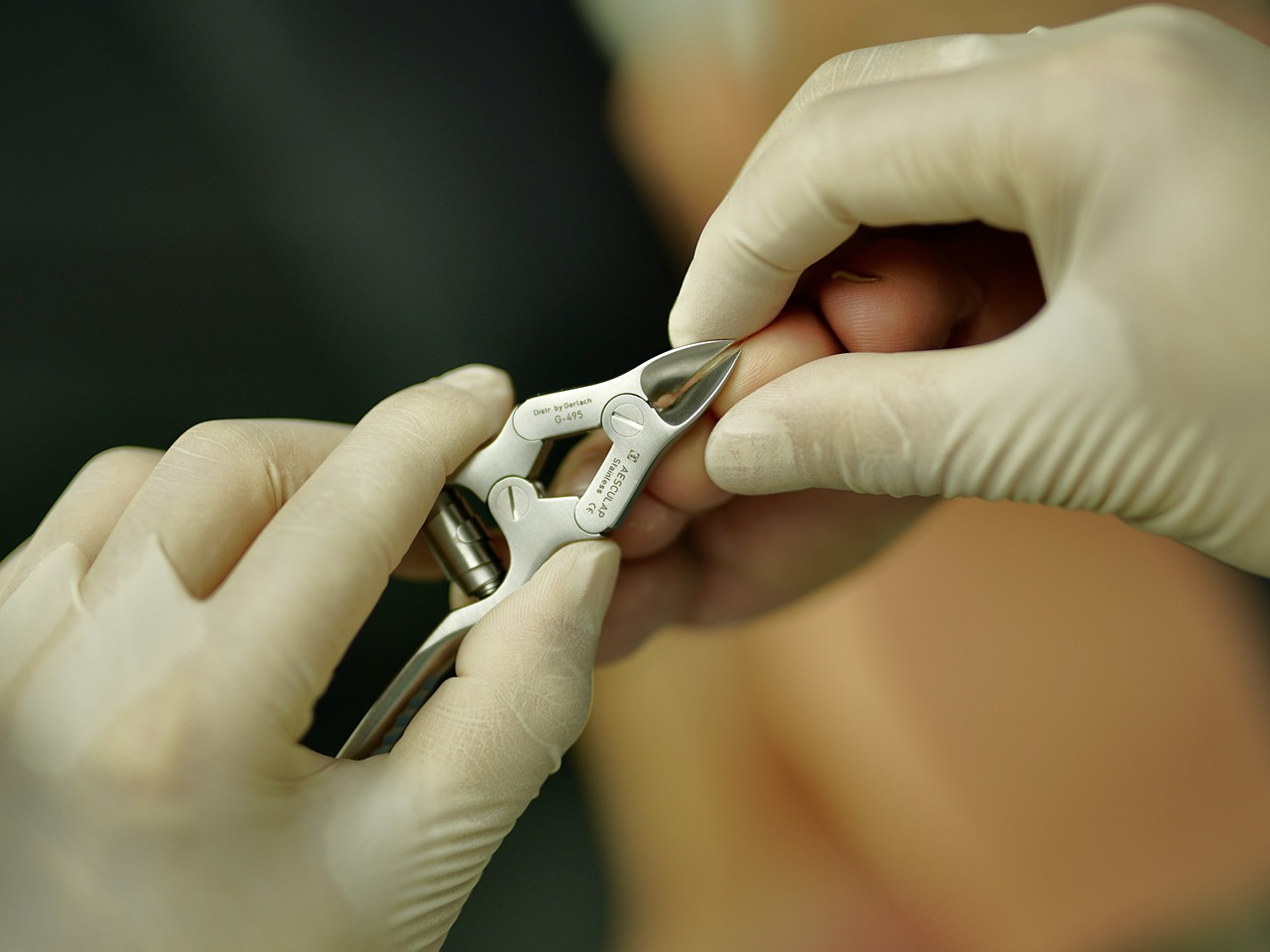
Before laser application, thickened nails should undergo thorough mechanical debridement. Using specialized podiatric drills, a practitioner thins the hyper-keratinized nail plate. This reduction removes excess fungal mass and decreases the physical distance the laser energy must travel, maximizing photothermal efficacy.
Step 2: Custom Laser Intervals
Because older nails grow slowly, the window for potential re-infection is longer. While a young patient might require 2 to 3 laser sessions, older individuals often benefit from a structured protocol involving 4 to 6 sessions spaced 4 to 6 weeks apart. This consistent suppression keeps fungal activity at zero while the slow-growing nail plate advances.
Step 3: Supportive Home Care
To compensate for brittle, altered keratin, patients should implement supportive habits at home:
- Moisturization: Applying specialized urea-based creams to the surrounding skin and nail borders helps maintain keratin flexibility and prevents micro-fissures.
- Antimicrobial Hygiene: Spraying shoes with antifungal agents protects the slow-growing nail from environmental spores.
- Proper Footwear: Ensuring shoes have a wide toe box prevents repetitive micro-trauma, which can damage fragile keratin structures.

8. Conclusion: Restoring Vitality to Aging Nails
The natural evolution of the nail unit over time is characterized by a definitive slowdown in growth velocity and structural changes to the keratin matrix. For older populations, these changes frequently combine to create a perfect environment for chronic fungal infections, diminishing overall foot health and quality of life.
Traditional treatment approaches often fall short when facing the physical barrier of thickened keratin or the systemic complications of geriatric pharmacology.
Advanced laser nail treatment offers a targeted, safe, and effective solution. By penetrating dense keratin structures without systemic side effects, laser technology allows practitioners to eliminate infections at the source. This approach provides older adults with a clear, reliable path toward healthier, stronger, and more resilient nails.