A Complete Guide to Laser Care and Healthier-Looking Nails
If you live in Dallas, TX, you know that sandals, pools, gyms, and outdoor activities are a part of your everyday lifestyle. But when thick, yellow, brittle, or discolored toenails enter the picture, you may find yourself hiding your feet instead of wearing comfortable and fashionable open-toed shoes.
Toenail fungus, medically known as onychomycosis, is a common fungal infection that can affect one or several toenails. It can cause nails to become yellow, white, brown, thickened, crumbly, or separated from the nail bed. While toenail fungus is often considered a cosmetic concern, more advanced infections can cause discomfort, difficulty wearing closed-toe shoes, and overall embarrassment.
For people living in and near Dallas who have tried over-the-counter products without seeing results, laser treatment for toenail fungus may be an option worth discussing with a podiatrist.
So, what should Dallas patients know before making an appointment for laser treatment? How does it compare to other treatments for toenail fungal infections?
What Is Toenail Fungus?
Toenail fungus occurs when fungi infect the nail plate and nail bed. Dermatophytes are common causes, although yeasts and non-dermatophyte molds can also be responsible.
The infection often starts subtly. You might notice a small white or yellow spot under the tip of the nail. Over time, the toenail fungus symptoms may start like:
- Yellow, white, or brown discoloration
- Thickened or distorted nails
- Brittle or crumbly structure
- Difficult to trim
- Separated from the nail bed
- Cheesy-smelling odor in some cases
Toenail fungus can be particularly stubborn to get rid of. Simply treating the visible surface of the nail is not enough, as the toenail fungus also lies underneath or within the nail.
Another challenge is that toenails grow very slowly. Even when a treatment successfully eliminates the fungus, the nail does not instantly look normal. A healthy nail has to grow out from the base, which can take up to 18 months in some cases.
Why Is Toenail Fungus So Common in Dallas?
The Dallas lifestyle can present the perfect opportunities for fungal infections to spread.
Think about gyms, swimming pools, locker rooms, public showers, and nail salons. Walking barefoot in these environments can increase your exposure to fungal infections.
Then there is the Texas heat.
Warm, sweaty shoes can create a moist environment surrounding your feet. Wearing the same pair of shoes for prolonged periods without allowing them to dry completely is the perfect environment where fungi will thrive.
The good news is that you don’t have to give up your favorite Dallas activities. Instead, you can focus on preventing fungus.
You should be wearing clean socks, allowing shoes to dry between uses or not using them daily, keeping feet clean and dry, not sharing nail clippers, and wearing sandals or water shoes in communal showers and pool areas. This is especially important if you just received treatment, as you can always get reinfected after treatment.
How Does Laser Treatment for Toenail Fungus Work?
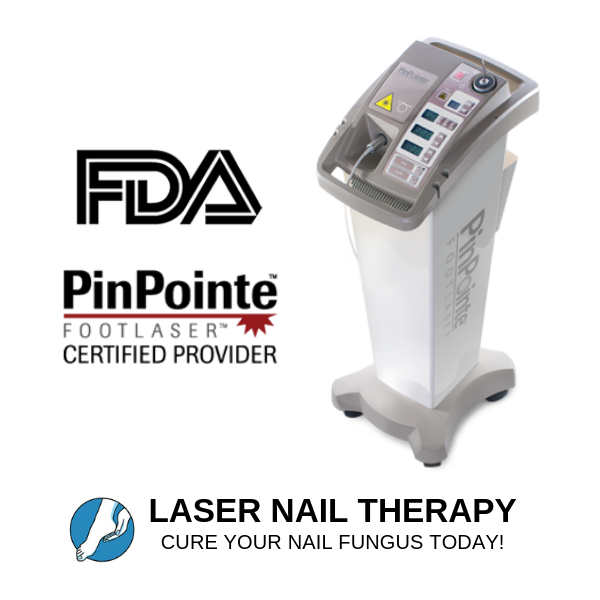
For people living in or near Dallas looking for a medication-free approach to toenail fungus, PinPointe FootLaser treatment is one of the most established laser technologies specifically associated with fungal toenail treatment. This treatment not only has a very high cure rate it is also FDA-cleared.
Laser treatment uses concentrated light energy directed at the affected toenail area.
The PinPointe laser treatment is performed in a licensed podiatrist’s office. The laser is passed over the affected toenail according to the provider’s treatment protocol.
The goal is to deliver energy through the nail to the area affected by the fungal infection.
The procedure itself is painless. You can go about your daily activities right after the laser treatment.
Will My Toenail Look Healthy Immediately Afterward?
No, the damaged portion of the toenail will not become clear immediately after treatment. However, the nail’s appearance may gradually improve as new growth replaces the older, discolored section.
Toenails grow slowly, so think of the nail as a timeline. The thickened, yellow, or damaged portion has already grown and must move toward the tip before you can trim it away. Treatment cannot erase that existing damage.
Instead, watch for clear-looking nail growth near the base. This new growth will gradually extend toward the tip over the following months. A big toenail may take approximately 12 to 18 months to grow out completely.
Laser Nail Therapy uses the PinPointe FootLaser, which is FDA-cleared for a temporary increase in clear nail in patients with onychomycosis. Individual results vary, and no treatment can guarantee complete or permanent clearance.

What to Expect During Your Appointment?
Your appointment begins with an examination of the affected toenails.
This is important because not every abnormal toenail is caused by fungus. Trauma, psoriasis, repeated pressure from shoes, nail dystrophy, and other conditions can cause nails to become thick, discolored, or distorted.
Once the correct diagnosis is established, the licensed podiatrist trims and performs debriedment on the affected nails before the laser treatment. This can help remove damaged nail material and make the affected area easier to treat.
Patients often describe laser treatment as painless with just a slight warming sensation. After treatment, there is no downtime. Additionally, the doctor may give you specific instructions for nail care, footwear, and hygiene to prevent reinfection.
How Long Until My Toenails Looks Normal Again?
This is where realistic expectations become especially important. Treating the fungal infection does not instantly replace the damaged portion of the toenail with a healthy-looking nail.
Instead, a clear-looking nail must gradually grow from the base. Because toenails grow slowly, improvement takes time and varies between patients. You may begin to notice healthier-looking growth near the base while the older, discolored portion remains closer to the tip.
Visible improvement may develop over several months, while a big toenail can take approximately 12 to 18 months to grow out completely. During follow-up visits, your podiatrist will evaluate your progress by looking for clearer new growth rather than expecting the entire nail to change immediately.
Why Do Topical Treatments Not Work?
Over-the-counter antifungal topical treatments aren’t necessarily useless. The bigger issue is that toenail fungus can be difficult to treat, and topical treatments do not penetrate the nail bed where the toenail fungus infection also lies.
Prescription topical medications can work for certain mild to moderate cases, but treatment may require consistent daily application for many months before seeing any results. That is a long time to remember to treat your toenails. Another problem is that patients sometimes stop treatment once the nail looks slightly better.
Toenail fungus infections require consistency. Topical medications such as efinaconazole, tavaborole, and ciclopirox have demonstrated effectiveness in clinical trials, but complete cure rates remain relatively modest compared with other treatment options.
So topical treatment can work, but it isn’t necessarily the fastest or easiest solution for every patient. It might just be the most cost-effective one.
How Effective is Oral Medication?
Oral antifungal medication is another option for treating toenail fungus. Terbinafine is commonly prescribed because it can be effective, but it is not appropriate for all patients.
Before recommending an oral antifungal medication, your podiatrist will review your medical history, current medications, and other relevant health factors. Terbinafine can affect the liver, so patients typically need liver function testing before beginning treatment. The doctor may also recommend additional monitoring during treatment based on the patient’s health and individual risk factors.
Some patients prefer to avoid oral medication, cannot take it because of a medical condition or possible drug interaction, or would rather receive an in-office treatment. Laser therapy offers a non-oral option that does not expose the entire body to an antifungal drug. Your podiatrist can explain the potential benefits and limitations of each approach and help determine which option may be appropriate for you.
Does Tea Tree Oil Work as a Treatment Option?
Tea tree oil is one of the most popular home remedies for toenail fungus. You may see claims online suggesting that applying tea tree oil will cure your toenail fungus infection.
There is some scientific research and small-study evidence suggesting antifungal activity, but that is very different from proving that tea tree oil reliably cures toenail fungus.
The American Academy of Dermatology notes that small studies have suggested possible benefits but that larger studies are needed to determine effectiveness and potential side effects.
In other words, tea tree oil may sound appealing because it is inexpensive and easy to find, but it shouldn’t replace a professional evaluation when you have a persistent or worsening toenail infection. You should definitely go see a licensed podiatrist and see what options they provide you.

Can Vicks VapoRub Cure a Toenail Fungus Infection?
Another popular home remedy is Vicks VapoRub.
There is no clinical research that states that applying Vicks VapoRub will cure your toenail fungus infection. Trying out these home remedies might show a slight visible improvement, but it is not killing the toenail fungus infection that lies on your nail and underneath your nail bed.
If your nail has been thick, yellow, and distorted for years, relying exclusively on a home remedy could mean delaying a proper diagnosis and treatment plan.
Could a Vinegar Soak Help Treat a Toenail Fungus Infection?
Vinegar foot soaks are another common home remedy people tend to do. The appeal is obvious: vinegar is inexpensive and readily available.
The problem is that there isn’t strong clinical evidence showing that vinegar soaks eliminate a toenail fungus infection.
Just because a home remedy can fight fungus in a lab doesn’t mean it will cure a fungal infection in real life.
If a treatment doesn’t properly reach the infected parts of the nail or if it is not used consistently enough, then it will not resolve the toenail fungus infection.
Why Nail Polish Doesn’t Treat Toenail Fungus
Regular nail polish can hide discoloration, but it doesn’t treat the underlying toenail fungus infection.
In fact, covering an already damaged nail without dealing with the toenail fungus infection can make it harder to treat.
If you enjoy pedicures, tell your nail technician about your concerns and consider discussing the situation with a podiatrist before continuing pedicures on an infected nail.
Once the infection is under control and a licensed podiatrist says it is appropriate, you can discuss returning to your normal nail-care routine. Or also ask if you could use antifungal nail polish to prevent reinfection of toenail fungus.
Does Removing the Infected Nail Get Rid of Toenail Fungus?
Trimming and debridement can be helpful when beginning treatment for toenail fungus.
In fact, nail trimming or debridement used alongside laser treatment can significantly improve treatment outcomes.
But simply cutting off the visible portion of a fungal nail doesn’t eliminate the infection.
The fungus will remain in the nail bed, and your new nail will still be infected.
So this is why nail removal isn’t a good treatment option, as the nail bed is also infected. It is important to know this before considering nail removal.
Could You Have Something Other Than Fungus?
This is one of the biggest reasons not to diagnose yourself based solely on the appearance of your toenails.
Trauma can cause nail thickening. Psoriasis can affect nail structure. Repeated pressure from athletic shoes can cause discoloration. Other nail disorders can mimic fungal infections.
If you spend money on laser treatment for a nail that isn’t actually infected with fungus, you may not get the results you expected.
A professional examination by a licensed podiatrist will help determine what you’re actually dealing with.
Toenail Fungus Prevention Routine
Once you get laser treatment done, prevention becomes just as important as the laser treatment itself. Consider making these habits part of your routine:
- Keep your feet dry. Dry your feet thoroughly after bathing, especially between your toes.
- Change socks regularly. If your feet sweat heavily, consider changing socks during the day.
- Rotate shoes. Give shoes time to dry completely before wearing them again.
- Protect your feet in communal areas. Wear sandals or shower shoes in locker rooms, pools, public showers, and communal bathrooms.
- Don’t share nail tools. Toenail clippers, nail files, and other instruments can spread fungal infections.
- Treat your athlete’s foot. Fungal skin infections can contribute to reinfection of the nails.
- Keep nails trimmed. This will help track your progress after laser treatment
- Follow the treatment plan. Your licensed podiatrist could have recommended post-treatment care.
Preventive care is particularly important because toenail fungus can return even after successful treatment.

Is Laser Treatment Right for You?
If you’ve been hiding your feet because of thick, yellow, brittle, or discolored toenails, Laser Nail Therapy Pinpointe laser treatment may be an option worth discussing with your podiatrist.
The laser procedure does not require anesthesia and allows you to return to normal activities right after the treatment.
But the most important first step isn’t choosing a laser. It’s confirming the diagnosis.
Not every thick or discolored toenail is caused by fungus. Trauma, psoriasis, nail disorders, and other conditions can produce similar symptoms. Treating the wrong condition won’t produce the results you want.
Once the diagnosis has been confirmed by a licensed podiatrist, you can compare PinPointe FootLaser treatment with prescription topical medications or oral antifungal medication.
Pros for Laser Treatment
Patients considering laser treatment for toenail fungus may appreciate several potential advantages:
- Non-invasive treatment: No surgical removal of the toenail is required.
- Minimal downtime: Patients can generally return to their normal activities after treatment.
- No anesthesia: PinPointe treatment typically does not require numbing medication.
- Quick appointments: The whole appointment, including the consultation and the treatment, usually takes about 1 hour.
- Targeted approach: The laser is directed at the affected nails rather than requiring an oral medication to circulate throughout the whole body.
- Convenient alternative: It may be an option for people who have not had the results they wanted from topical products or who want to discuss alternatives to oral antifungals.
- No need to remove the nail: The treatment is performed on the existing nail rather than requiring surgical extraction.
- Suitable for busy lifestyles: With no downtime, patients can return to work and other everyday activities after treatment.
It is important to remember that results vary between patients. Laser treatment should not be marketed as an instant or guaranteed cure. It takes time to see results. The FDA-cleared PinPointe laser treatment treats your nails for a toenail fungus infection. You should discuss expectations with a licensed podiatrist.
Why Is Post-Treatment Care Important?
Laser treatment is only one part of the process. Post-treatment care is extremely important because toenail fungus can return. Even after treatment, your toenails can be exposed to fungi through shoes, socks, locker rooms, swimming pools, nail salons, and other environments.
At Laser Nail Therapy, patients may be advised to use antifungal products and take steps to reduce the risk of reinfection. The post-treatment care emphasizes the importance of ongoing care because fungus can return if the toenails and footwear are not properly managed.
After your laser treatment, follow the specific instructions provided by your Laser Nail Therapy foot doctor. In general, good foot hygiene is an important part of protecting your results.
The Bottom Line
Toenail fungus can be stubborn, embarrassing, and difficult to treat.
For people in the Dallas area interested in a laser-based approach, PinPointe FootLaser provides a treatment option specifically for toenail fungus infections. The laser treatment is FDA-cleared. Our licensed podiatrists in the Dallas area offer it to our patients with toenail fungus infections.
However, patients should have realistic expectations. The infected nails will not instantly turn clear after the treatment. Healthy-looking nails take time to grow out. Results can vary; additional re-treatment may sometimes be recommended, and reinfection is possible.
Most importantly, laser treatment should be discussed with a licensed podiatrist instead of just choosing the least expensive option like home remedies or topical solutions.
If you’re searching for laser toenail fungus treatment in Dallas, TX, start with a professional evaluation, ask questions about the laser treatment, and compare your treatment options.
Then you can get back to enjoying your Dallas lifestyle. This can be done with healthier toenails and the confidence to wear the open-toed shoes you actually want to wear.
Laser Treatment for Toenail Fungus
As you can see, tips for healthy feet without nail fungus can be easy to find. If you have caught nail fungus, it can be easily treated using the FDA-cleared PinPointe laser. It typically only takes one treatment. Other treatments, like topical solutions and oral medication, are not as effective. Topical solutions have a very low cure rate. This is because the solution does not penetrate all the way through the nail bed. Oral medication is not recommended by our nail doctors. This is because it can lead to liver toxicity. You would need to have consistent blood tests throughout the course of taking the medication.
Our nail doctors in Dallas, TX, recommend this treatment for toenail fungus infections. The PinPointe Laser treatment has the highest cure rate in the market. It has no side effects and no recovery period. As a result, you return to your daily activities right after the treatment. Also, there’s no pain.
If you have any signs of nail fungus, call us at (800) 672-0625 at our Dallas, TX location. Visit our website for more information on our doctors at one of our over 150 locations.
Fun Things to Do in Dallas
Treating toenail fungus doesn’t mean you have to put your Dallas life on hold. In fact, there are plenty of ways to enjoy the city while staying mindful of your feet.
Explore the Dallas Arts District
The Dallas Arts District is one of the city’s major cultural destinations, with museums, theaters, galleries, restaurants, and other attractions. Visit Dallas describes it as a 20-block cultural district with a wide range of arts and entertainment experiences.
It’s a great option when you want an activity that doesn’t revolve around swimming pools, locker rooms, or communal showers.
Explore Bishop Arts District
For shopping, restaurants, coffee, boutiques, and neighborhood atmosphere, Bishop Arts District is one of Dallas’ most recognizable destinations.
Visit Dallas describes the Oak Cliff neighborhood as a place to explore restaurants, bars, coffee shops, boutiques, galleries, and local businesses.
Just remember to wear comfortable, breathable shoes and socks if you’re going to spend a lot of time walking.
Museums and Aquariums in Dallas
If you enjoy museums and aquariums, then Dallas has the perfect palces to visit while exporing the city.
Spend an Afternoon at the Perot Museum
If Texas heat has you looking for an indoor activity, the Perot Museum of Nature and Science is an easy choice.
It offers an air-conditioned environment where you can spend several hours exploring exhibits without worrying about the summer heat.
Visit Dallas specifically highlights the Perot Museum among Dallas’ major attractions and family-friendly destinations.
Visit the Dallas World Aquarium
Another indoor option is the Dallas World Aquarium.
Visit Dallas recommends the aquarium as a summer escape, highlighting its rainforest environments and animal exhibits.
It can be a fun way to spend an afternoon without exposing your feet to the communal wet environments commonly associated with pools and locker rooms.
Exploring the Nature in Dallas
If you love being outdoors and adventurous, then Dallas has amazing places to visit and dive into.
Visit Klyde Warren Park
Klyde Warren Park provides green space right in the heart of Dallas.
The park includes food options, playgrounds, games, events, and open spaces.
During hotter months, plan your visit for the cooler parts of the day and stay hydrated.
Explore the Dallas Arboretum
If you enjoy gardens, photography, and outdoor scenery, the Dallas Arboretum and Botanical Garden is another Dallas favorite.
The 66-acre attraction features gardens, seasonal events, and waterfront views near White Rock Lake.
Because Dallas summers can be extremely hot, consider visiting in the morning or during cooler seasons.