The Real Cause of Persistent Toenail Fungus
Thick, yellow, brittle, or discolored toenails are a common issue that affects countless people worldwide. Although these changes are often associated with aging or repeated injury, they are frequently caused by organisms that live beneath the nail, where they are protected from the outside environment. Because the source of the problem is hidden, many people waste months or even years trying creams, oils, soaks, and home remedies without seeing meaningful improvement.
The frustration is understandable. A person may carefully apply topical products in your daily routine, exfoliate the nail during showers, or follow numerous online propaganda, only to find that the nail continues to become thicker, more brittle, or increasingly discolored. This often triggers embarrassment, avoidance of sandals or barefoot activities, and the feeling that nothing seems to be solved.
The reality is that persistent nail problems are not commonly caused by not enough effort. Instead, they are largely the result of the unique structure of the toenail itself. Understanding how the nail is structured illustrates why many traditional methods struggle to actually tackle the source of the problem and why newer technologies rely on different approaches.
Understanding the Structure of the Toenail
At first glance, a toenail appears to be a simple piece of hardened tissue. Since trimming a nail does not cause pain, many people assume it is nothing more than a protective shield. In reality, the toenail is part of a much more complex biological system.
The visible nail, known as the nail plate, is mostly composed of tightly packed keratin. This dense material serves as a protective barrier, protecting the delicate tissues beneath from pressure, impact, moisture, and environmental damage. Its primary function is protection, making it naturally resistant to outside dangers that might damage the delicate tissues.
Directly beneath the nail plate lies the nail bed, a layer of living tissue rich in blood vessels and nerve endings. This area anchors the nail to the toe while supplying nutrients that support healthy growth.
At the base of the nail sits the nail matrix, which functions as the nail’s growth center. New nail cells are constantly created here before slowly moving forward over several months to become the visible nail.
When organisms begin growing beneath the nail, they typically establish themselves between the nail plate and the nail bed. Because this area is protected by the thick outer nail, it becomes difficult for external treatments to penetrate deeply enough to reach the source of the problem.
Why Topical Treatments Often Have Limited Results
Many over-the-counter products promise to improve the appearance of damaged toenails. These include medicated lacquers, creams, essential oils, herbal remedies, and different soaking solutions.
While these products may improve the surface appearance of the nail or seem to soften thickened areas, they face one significant obstacle: the nail plate itself.
The keratin that makes up the nail is designed to resist water and outside substances. This protective barrier prevents many liquids from penetrating beyond the outermost layers. Even products specifically formulated for nail conditions can have difficulty reaching the tissue underneath where the underlying problem often exists.
As the nail becomes thicker over time, this challenge becomes even more difficult to tackle. Damaged nails frequently respond by producing additional layers of keratin, creating an increasingly dense barrier. The thicker the nail becomes, the farther topical products must travel before reaching their intended target.
In many cases, only a very small amount of the active ingredient is able to penetrate the nail. If the affected area lies several millimeters below the surface, much of the treatment remains stuck limited to the outer layers.
This structural limitation helps explain why people often continue applying topical products consistently without seeing noticeable improvement, despite carefully following the instructions.
The Challenges of Oral Medications
Topical products cannot always penetrate the nail effectively, healthcare providers may prescribe oral antifungal medications for certain patients.
Unlike creams or solutions put on top of the nail, oral medications enter the digestive system before being absorbed into the bloodstream. The blood circulates then moves the medication throughout the body, eventually arriving at the tissues beneath the nail.
This inside-out approach allows medication to reach areas that topical products often cannot.
However, systemic medications also introduce additional considerations.
Since the medication circulates throughout the entire body rather than remaining localized to the toe, it passes through organs such as the liver during processing. For this reason, some oral antifungal medications require medical monitoring, including liver function testing in certain patients. They may also interact with other medications or may not be appropriate for individuals with certain medical conditions.
Another factor is circulation. Blood flow naturally decreases toward the farthest parts of the body, including the toes. Individuals with poor circulation, diabetes, vascular disease, or advanced age may experience reduced delivery of medication to the affected nail compared to healthier tissues elsewhere in the body.
While oral medications remain an effective treatment option for many individuals, these considerations are important when determining the most effective approach for each individual’s needs.
How Laser Technology Uses Light Instead of Medication
Laser technology approaches damaged toenails using an entirely different method.
Rather than only using creams to pass through the nail or medications to circulate throughout the body, medical lasers use focused light energy that travels through the nail plate.
Certain wavelengths of laser light can pass through the clear keratin of the nail with relatively little absorption. Once the energy reaches deeper tissues beneath the nail, it interacts with structures that absorb light more readily.
This process creates controlled heating within targeted areas while minimizing effects on surrounding healthy tissue.
Unlike medications, laser energy is delivered directly to the treatment area without circulating throughout the bloodstream. Because the treatment remains localized, it avoids many of the systemic considerations associated with oral medications.
Modern laser systems also deliver energy in extremely short pulses. These rapid pulses allow surrounding tissues to dissipate heat between bursts, helping maintain patient comfort while protecting nearby healthy structures.
Although individuals may experience short sensations of warmth during treatment, laser procedures generally do not require injections, incisions, or recovery time.
Why Healthy Nail Growth Takes Time
One common misconception is that any treatment can instantly restore a damaged toenail to a clear toenail.
In reality, nails grow very slowly. A healthy toenail typically requires between 12 and 18 months to grow from the base of the nail to the tip. Any portion of the nail that has already become thickened, brittle, or discolored cannot magically become clear overnight.
Instead, improvement manifests as a new, healthy nail gradually grows outward from the nail matrix. Over time, the older damaged nail is slowly pushed forward until it can eventually be trimmed away during normal nail care.
This gradual process explains why patience is an important part of any treatment plan, regardless of the method chosen.
What to Expect During a Laser Treatment Session
Many people put off seeking treatment because they assume it will involve surgery, painful procedures, or lengthy recovery periods. In reality, laser treatment is a non-invasive procedure that is typically completed during an outpatient office visit.
Before treatment begins, a healthcare provider will examine the affected toenails to determine whether laser therapy is an appropriate option. Since nail discoloration can have multiple triggers—including trauma, psoriasis, or other nail disorders—a professional evaluation helps ensure the condition is correctly identified.
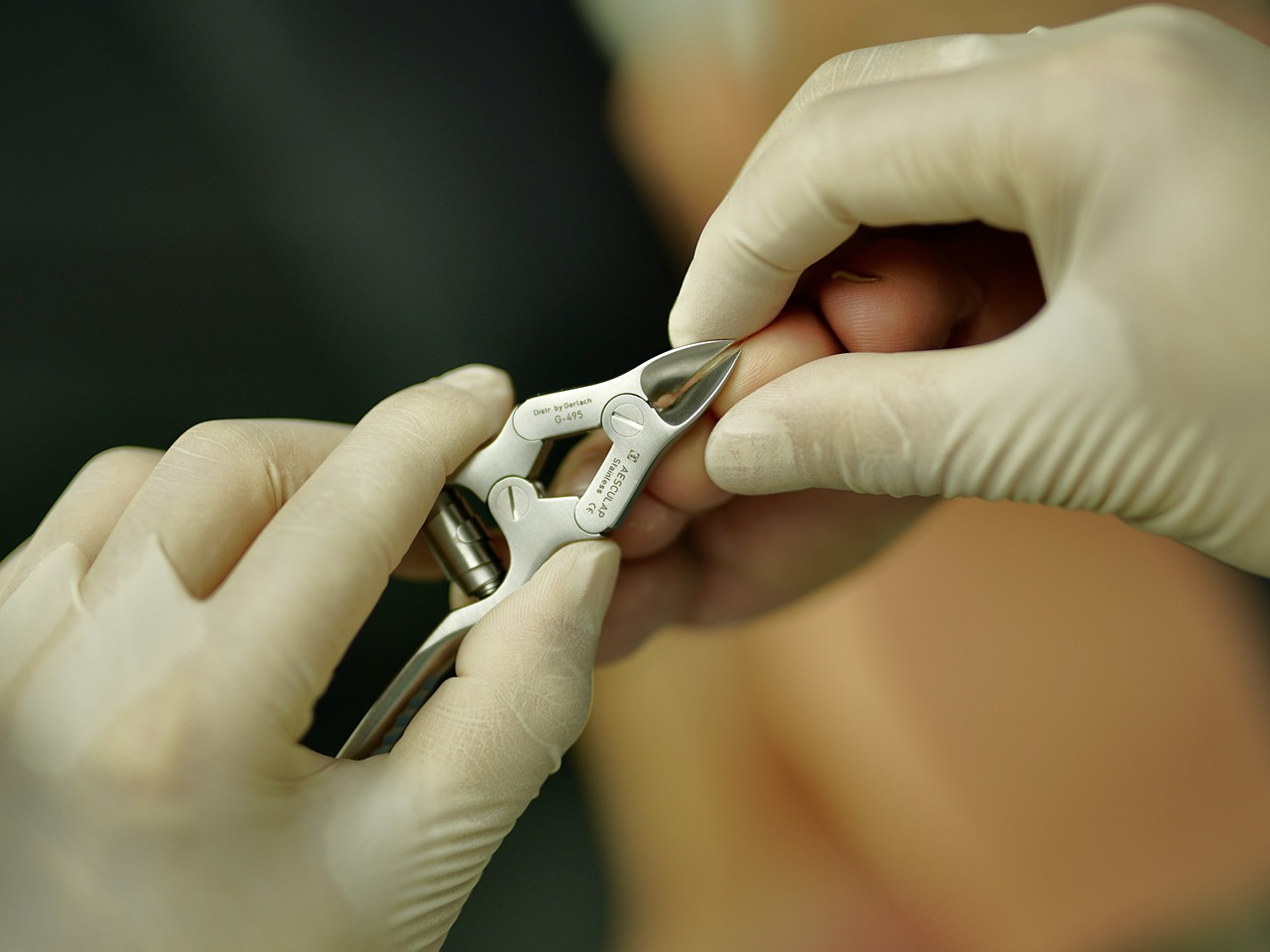
If the nail has become significantly thickened, the provider may reduce some of its thickness using a specialized debridement instrument before treatment. This process removes excess nail material that has accumulated over time and allows laser energy to travel more efficiently through the nail plate. Because the nail itself contains no nerve endings, this step is generally painless.
Once the nail has been prepared, the laser handpiece is moved across each affected toenail in a systematic pattern. Short pulses of light are delivered evenly across the entire nail surface to ensure consistent coverage.
During treatment, many patients describe feeling warmth that gradually builds beneath the nail. Others compare the sensation to brief snaps from a small rubber band or quick flashes of heat. These sensations are temporary and usually disappear immediately after each pulse.
Unlike surgical procedures, laser treatment does not involve cutting the nail, making incisions, or removing tissue. There are no stitches, bandages, or recovery restrictions. Most individuals return to work, drive home, exercise, or continue their normal daily activities immediately after the appointment.
How Laser Treatment Supports Healthy Nail Growth
Laser treatment does more than target the affected area beneath the nail. Research suggests that the gentle heating produced during treatment may also stimulate local circulation around the nail bed.
Healthy circulation is essential because blood vessels deliver oxygen and nutrients to the nail matrix, where new nail cells are produced. Improved blood flow supports the body’s natural healing processes and provides the resources needed for healthy nail growth.
As a new nail grows from the matrix, it gradually replaces the older damaged nail. This process occurs slowly because toenails naturally grow much more slowly than fingernails.
On average, a toenail grows approximately one to two millimeters each month. Depending on the individual’s age, circulation, overall health, and the severity of the damage, complete replacement of the nail may require 12 to 18 months.
During this time, the damaged portion of the nail slowly moves toward the tip of the toe as the healthier nail continues growing from the base. Regular trimming gradually removes the older damaged nail until only a healthy nail remains.
Understanding this timeline helps establish realistic expectations. Even when treatment successfully addresses the underlying cause, visible improvement occurs gradually as the nail naturally replaces itself.
Why Daily Foot Care Still Matters
Although treatment addresses the existing problem beneath the nail, maintaining a healthy environment afterward plays an important role in preventing future infections.
Fungi thrive in warm, dark, and moist environments. Shoes that remain damp from perspiration create ideal conditions for fungal organisms to survive. Wearing the same pair of shoes every day without allowing them to dry completely may increase the likelihood of recurrence.
Rotating footwear throughout the week allows each pair to dry more thoroughly between uses. Shoes can also be cleaned periodically using disinfecting products specifically designed for footwear to reduce microbial contamination.
Socks are another important consideration. Cotton socks absorb moisture but tend to retain it against the skin for long periods. Moisture-wicking materials, including many synthetic athletic fabrics and certain wool blends, move sweat away from the feet more efficiently and help keep the skin drier throughout the day.
Maintaining clean, dry feet after bathing or exercise is equally important. Drying carefully between the toes helps reduce moisture accumulation, which limits favorable conditions for fungal growth.
Reducing the Risk of Reinfection
Even after a damaged nail begins growing normally again, exposure to fungal organisms remains possible in everyday environments.
Public locker rooms, swimming pool decks, communal showers, and gym changing areas are common places where fungi may be present. Walking barefoot on these surfaces increases the opportunity for organisms to come into contact with the skin and nails.
Wearing shower sandals or flip-flops in shared public facilities creates a simple protective barrier that can significantly reduce direct exposure.
Proper nail care also contributes to long-term nail health. Toenails should be trimmed straight across rather than rounded excessively at the edges, reducing the likelihood of injury or ingrown nails. Nail clippers should be cleaned regularly, particularly if they have been used on damaged nails.
Individuals who regularly receive professional pedicures should also verify that instruments are appropriately sterilized between clients to reduce the risk of contamination.
People with diabetes or circulation disorders should pay particular attention to routine foot inspections and discuss any nail changes with their healthcare provider promptly, as early evaluation may help prevent more significant complications.
Patience Is Key To Recovery
One of the most common reasons people become discouraged during treatment is expecting instant cosmetic improvement.
Unlike skin, which continually sheds old cells, the nail must physically grow forward before visible changes become apparent. The damaged portion cannot simply transform into a healthy nail overnight.
Instead, the goal is to allow healthy nails to replace the damaged nail over time.
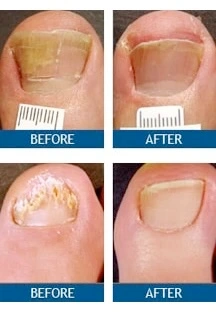
Many patients begin noticing a narrow band of clearer nail developing near the base several months after treatment. As growth continues, this healthy section gradually becomes longer while the damaged portion moves toward the tip.
The exact rate of improvement varies from person to person. Factors such as age, circulation, smoking, certain medical conditions, and previous nail trauma may all influence how quickly nails grow.
Regular follow-up appointments may be recommended so progress can be monitored and any concerns addressed throughout the regrowth process.
Understanding Why Different Treatments Produce Different Results
Each treatment option works through a different mechanism.
Topical products attempt to penetrate the protective nail plate from the outside. Their effectiveness depends largely on how much of the active ingredient can reach the tissue beneath the nail.
Oral medications travel through the bloodstream and deliver medication from within the body, making them an effective option for many individuals but also introducing considerations such as medication interactions and liver monitoring.
Laser technology follows an entirely different approach by delivering concentrated light energy directly through the nail plate without relying on either surface penetration or systemic circulation.
Understanding these differences helps explain why treatment recommendations may vary depending on the severity of the condition, the thickness of the nail, underlying medical conditions, and each patient’s individual needs.

Looking Beyond the Nail
Damaged toenails affect more than appearance alone. Many individuals become self-conscious about wearing sandals, going barefoot at the beach, participating in sports, or visiting swimming pools. A lot of others avoid social situations where removing shoes might draw attention to their toenails.
Addressing the underlying cause is not simply about improving how a nail looks. Healthy nails also contribute to comfort, confidence, and overall foot health.
Learning how the nail is structured provides valuable insight into why many surface treatments struggle to produce lasting results. The nail plate serves as an effective protective barrier, making it difficult for many topical products to reach deeper tissues where the underlying problem often exists.
Advances in laser technology offer an alternative approach by using concentrated light energy to reach beneath the nail without relying on creams or systemic medications. Combined with good foot hygiene, proper footwear care, and patience during the natural regrowth process, this approach supports the gradual return of healthier nail growth over time.
As research and technology continue to advance, understanding the science behind nail health allows individuals to make more informed decisions and establish realistic expectations for treatment and long-term maintenance.