The Smart Solution for Clear Nails
Fungal nail infections are one of the most stubborn conditions. What a lot of people do not know is that the medical term for it is onychomycosis. It affects millions of people globally, it alters the thickness, color, and structural integrity of fingernails and toenails. For a long period of time, the approach to this condition relied entirely on topical lacquers or systemic oral medications. However, topical solutions struggle to penetrate the dense keratin armor of the human nail plate, and oral medications carry the risk of systemic side effects, particularly liver toxicity, requiring regular blood monitoring.
In response to these therapeutic limitations, medical laser technology emerged as a non-invasive alternative. By applying specific wavelengths of light energy to the infected nail apparatus, lasers aim to eliminate the pathogen locally without introducing chemicals into the bloodstream. Clinical studies frequently highlight high initial clearance rates, leading many to view laser therapy as a definitive solution.
Yet, a significant number of individuals complete their full course of laser sessions only to experience a frustrating clinical outcome: the thick, discolored nail remains, or the infection returns shortly after treatment ends. When a laser treatment fails, patients and providers often assume the technology itself is flawed, or that the device used lacked the necessary power. In reality, modern medical lasers are highly precise engineering marvels capable of delivering exact doses of energy. The true cause of treatment failure is rarely a failure of the machine. Instead, it is driven by an intricate combination of fungal survival mechanisms, hidden micro-anatomical structures, and the sub-surface physics of light interactions within human tissue. To understand why laser nail therapy succeeds or fails, we must look past the visual surface of the nail plate and examine the biomechanical and cellular barriers that allow fungi to survive high-energy light exposure.
Hyperkeratotic Debris and Light Scattering
To understand why lasers fail to eliminate a fungal infection that is deeply rooted, one must first look at the physical physics of light propagation through tissue. For a laser to destroy a pathogen, the light energy must travel completely through the nail plate, reach the underlying nail bed, and be absorbed by the fungal cells. In a healthy or mildly infected nail, this process occurs with minimal resistance. On the other hand, chronic or severe fungal infections fundamentally alter the physical structure of the nail unit through a process called hyperkeratosis.
Hyperkeratosis is a protective and pathological response triggered by the presence of dermatophytes, yeasts, or molds beneath the nail. When these organisms consume the keratin within the nail plate, they shed metabolic waste products and physically irritate the delicate nail bed beneath. In response to this chronic cellular stress, the nail bed rapidly accelerates its production of excess keratin cells. Rather than forming a flat, translucent, organized structure, these cells accumulate as a dense, chaotic, chalky, and tightly compacted layer of debris underneath the nail plate. This debris causes the classic thickening and lifting of the nail.
From an optical perspective, this hyperkeratotic mass is a devastating barrier. Human nails are naturally anisotropic, meaning light travels through them unevenly, but a clean nail plate still allows for predictable light penetration. Hyperkeratotic debris, conversely, acts as a highly effective optical shield. The chaotic arrangement of keratin fibers, air pockets, and dried cellular remnants creates millions of microscopic boundary layers. When the laser beam hits this dense, chalky mass, the light does not pass through cleanly. Instead, it undergoes intense optical scattering and reflection.
As the laser light scatters sideways and backwards, its forward momentum is lost. The energy becomes diffused across a wide surface area rather than remaining focused on the deep target site. Consequently, by the time the light reaches the absolute lowest layers of the infection—where the fungus attaches to the living tissue—the energy density has dropped well below the therapeutic threshold required to destroy the microbial cells. The top layers of the nail may become intensely hot, but the root of the infection remains safe in a cool, shaded zone.
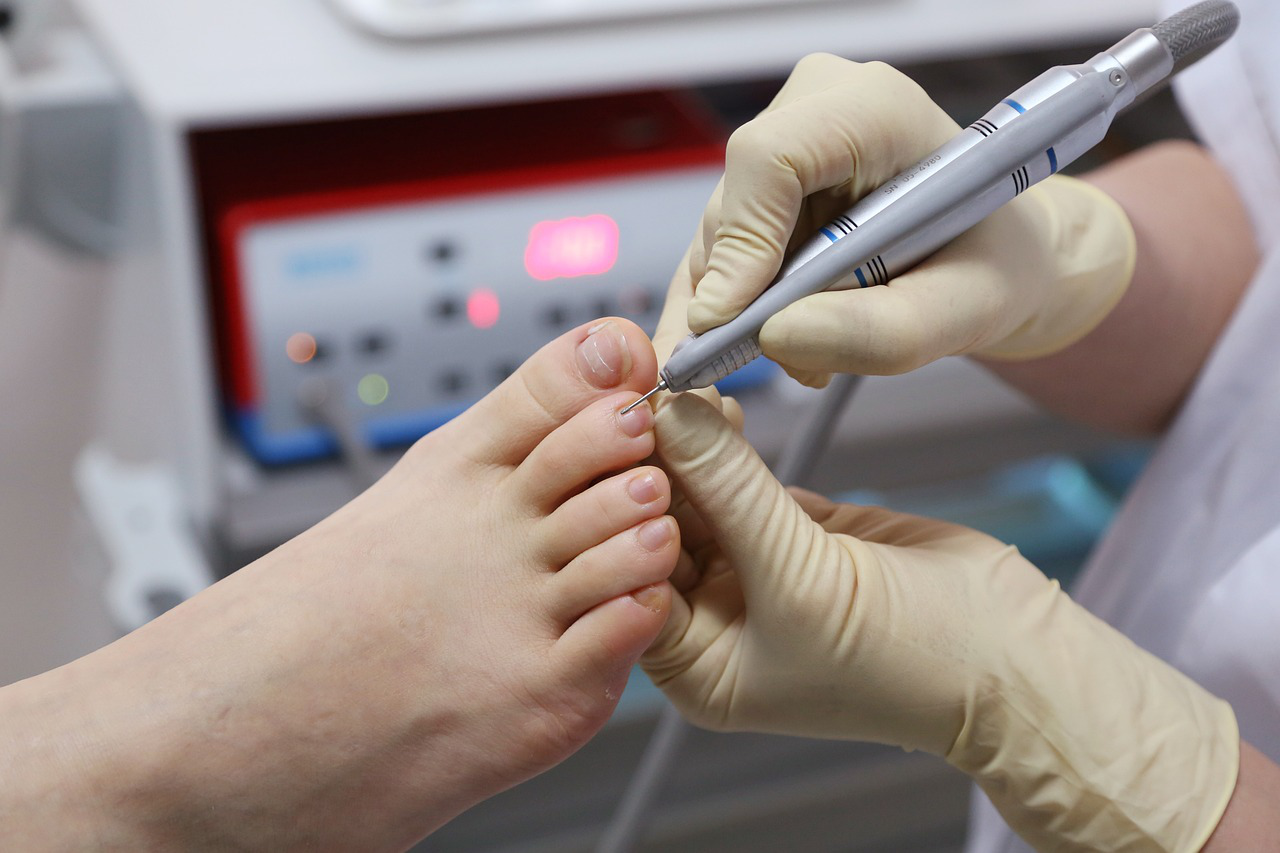
To overcome this optical shield, clinical protocols must look beyond the laser machine itself and integrate aggressive mechanical preparation. Medical professionals must use specialized equipment, such as heavy-duty podiatric drills or burs, to grind and thin the nail plate down to a fraction of its original thickness prior to emitting a single pulse of light. If a provider skips or rushes this mechanical debridement phase, the laser light will simply bounce around the superficial layers of debris, resulting in a clinical failure before the treatment has truly begun.

Fungal Fortresses: The Structural Mechanics of Biofilms
For many years, microbiological education treated fungi and bacteria as isolated, independent single cells swimming freely within an environment. While this state exists in laboratory petri dishes, it is rarely how pathogens behave inside a living human host. In a real-world nail infection, fungal organisms survive and thrive by organizing themselves into complex, highly structured multi-cellular communities known as biofilms. The transition from free-floating cells to a mature biofilm is one of the most powerful reasons why infections resist both chemical medications and physical laser energy.
When a fungal spore lands on the nail unit and germinates, it sends out root-like structures called hyphae. As these hyphae multiply and entangle themselves within the keratin matrix, the cells initiate a coordinated genetic shift. They begin secreting a thick, sticky, slime-like matrix composed of extracellular polymers, including proteins, glycoproteins, lipids, and complex sugars. This extracellular matrix fills the spaces between the fungal cells, effectively gluing the entire colony together and anchoring it firmly to the deep microscopic ridges of the nail bed.
A mature fungal biofilm functions like a fortified subterranean bunker. The sticky matrix acts as a physical and chemical barrier that alters how external forces interact with the cells inside. When a clinical laser system attempts to treat the nail, the biofilm alters the expected therapeutic mechanics in several distinct ways.
First, the matrix acts as a thermal buffer. Many clinical lasers, such as the short-pulse Neodymium-doped Yttrium Aluminum Garnet laser, rely on photothermal destruction. They work by heating the target tissue to a precise temperature—typically between fifty-five and sixty degrees Celsius—which causes the proteins inside the fungal cell to unfold and denature. However, the wet, dense polymer matrix of a biofilm possesses a high specific heat capacity. It absorbs a significant portion of the thermal energy and dissipates it evenly across the entire structural network. This prevents individual fungal cells within the core of the biofilm from reaching that critical destruction temperature. The laser may successfully single the outer perimeter of the colony, but the internal cellular core remains entirely viable.
Second, biofilms provide protection against mechanical shockwaves. Some advanced laser systems utilize ultra-short, nanosecond bursts of light energy, known as Q-switched technology. These devices aim to create a photoacoustic effect, sending intense acoustic shockwaves through the tissue to mechanically shatter the rigid cell walls of the fungus without generating excessive heat. Inside a biofilm, the flexible, rubbery extracellular matrix acts as a shock absorber. It cushions the fungal cells, dampening the acoustic vibrations and preventing the structural fracturing of the pathogen’s cell walls.
Furthermore, the cells deep within a biofilm matrix adapt their internal biology to survival conditions. Because oxygen and nutrients struggle to penetrate into the center of a dense biofilm, the fungal cells located at the core slow down their metabolism and enter a state of relative dormancy. Because many laser treatments rely on generating metabolic or oxidative stress to damage cellular DNA, these low-metabolism cells are naturally less vulnerable to the treatment. They sit quietly inside their protective bunker, waiting for the laser session to conclude, ready to rebuild the colony once the danger has passed.
The Metabolic Vault: Cellular Dormancy and Spore Survival
To appreciate the difficulty of fully eradicating a nail infection, one must examine the life cycle of the pathogens involved. Fungi possess an evolutionary adaptation that allows them to survive extreme environmental hostility: the ability to morph between an active growing state and a highly resilient dormant state. This morphological duality presents a severe challenge to modern light-based therapies.
During the active phase of an infection, the fungus exists as vegetative mycelia. These cells are actively growing, elongating, absorbing nutrients from the human host, and replicating. Because their cell walls are actively expanding and their internal metabolic engines are running at full speed, vegetative cells are highly sensitive to external disruption. When exposed to the thermal heat or the reactive oxygen molecules generated by a medical laser, these active cells suffer immediate, irreversible structural damage and die.
However, when environmental conditions become unfavorable—such as when the tissue temperature begins to climb rapidly during a laser procedure—the fungus can trigger a survival mechanism known as sporulation. The organism packages its core genetic material, along with a minimal set of essential metabolic enzymes, into a tightly compressed, spherical structure called a spore.
Fungal spores are biological vaults designed for long-term survival. Their outer shells are reinforced with incredibly thick, dense layers of chitin and glucan, bound together by hydrophobic proteins. This specialized composition makes them profoundly resistant to physical and chemical forces that would instantly kill a normal living cell. Spores can survive prolonged periods of freezing temperatures, extreme dryness, chemical radiation, and, crucially, intense heat.
When a practitioner applies a thermal laser to an infected nail, a race against time begins. A standard treatment session lasts between ten and twenty minutes. During this brief window, the laser energy easily obliterates the vast majority of the active, vegetative mycelia. The patient leaves the clinic feeling satisfied, and early visual signs may suggest the treatment was a total success. However, if the duration of the laser pulse or the total energy delivered was slightly insufficient, the highly resilient dormant spores scattered throughout the tissue will survive the thermal wave completely unharmed.
Once the laser session ends and the tissue returns to its normal baseline temperature, the environmental threat disappears. The surviving spores detect the presence of moisture and human keratin, and they begin to germinate. Over the course of several weeks, these spores hatch, transition back into active vegetative mycelia, and rapidly re-colonize the nail bed. This cellular rebirth explains why many patients report a temporary improvement in their nail health for a month or two following a laser session, only to watch in disappointment as the familiar thick, chalky discoloration returns. To achieve a true clinical cure, a laser protocol must be sustained and configured to reach the specific thermal and chemical thresholds required to denature the incredibly tough structural proteins inside the spore vault itself.
The Cold Toe Circulation Bottleneck
To appreciate the difficulty of fully eradicating a nail infection, one must examine the life cycle of the pathogens involved. Fungi possess an evolutionary adaptation that allows them to survive extreme environmental hostility: the ability to morph between an active growing state and a highly resilient dormant state. This morphological duality presents a severe challenge to modern light-based therapies.
During the active phase of an infection, the fungus exists as vegetative mycelia. These cells are actively growing, elongating, absorbing nutrients from the human host, and replicating. Because their cell walls are actively expanding and their internal metabolic engines are running at full speed, vegetative cells are highly sensitive to external disruption. When exposed to the thermal heat or the reactive oxygen molecules generated by a medical laser, these active cells suffer immediate, irreversible structural damage and die.
However, when environmental conditions become unfavorable—such as when the tissue temperature begins to climb rapidly during a laser procedure—the fungus can trigger a survival mechanism known as sporulation. The organism packages its core genetic material, along with a minimal set of essential metabolic enzymes, into a tightly compressed, spherical structure called a spore.
Fungal spores are biological vaults designed for long-term survival. Their outer shells are reinforced with incredibly thick, dense layers of chitin and glucan, bound together by hydrophobic proteins. This specialized composition makes them profoundly resistant to physical and chemical forces that would instantly kill a normal living cell. Spores can survive prolonged periods of freezing temperatures, extreme dryness, chemical radiation, and, crucially, intense heat.
When a practitioner applies a thermal laser to an infected nail, a race against time begins. A standard treatment session lasts between ten and twenty minutes. During this brief window, the laser energy easily obliterates the vast majority of the active, vegetative mycelia. The patient leaves the clinic feeling satisfied, and early visual signs may suggest the treatment was a total success. However, if the duration of the laser pulse or the total energy delivered was slightly insufficient, the highly resilient dormant spores scattered throughout the tissue will survive the thermal wave completely unharmed.
Once the laser session ends and the tissue returns to its normal baseline temperature, the environmental threat disappears. The surviving spores detect the presence of moisture and human keratin, and they begin to germinate. Over the course of several weeks, these spores hatch, transition back into active vegetative mycelia, and rapidly re-colonize the nail bed. This cellular rebirth explains why many patients report a temporary improvement in their nail health for a month or two following a laser session, only to watch in disappointment as the familiar thick, chalky discoloration returns. To achieve a true clinical cure, a laser protocol must be sustained and configured to reach the specific thermal and chemical thresholds required to denature the incredibly tough structural proteins inside the spore vault itself.
The Cold Toe Circulation Bottleneck
While a medical laser is a powerful tool for damaging or destabilizing an infection, the machine does not work in isolation. The ultimate eradication of any microscopic pathogen within the human body requires a partnership between the medical treatment and the patient’s own immune system. A laser can be thought of as a demolition team that breaks down a concrete wall, but if a clean-up crew does not arrive to cart away the broken concrete, the site remains blocked. In the context of laser nail therapy, the immune system is that essential clean-up crew, and its efficiency is directly tied to local blood circulation.
When a laser hits a fungal colony, it inflicts significant sublethal damage on many of the cells. It tears holes in cell membranes, disrupts mitochondrial energy production, and cross-links cellular proteins. If the human body is functioning optimally, this wave of cellular damage triggers an immediate inflammatory response. The body detects the cellular debris and releases signaling chemicals that open up local blood vessels, drawing an army of white blood cells, such as neutrophils and macrophages, directly to the nail bed. These immune cells identify the weakened fungi, engulf them through phagocytosis, and digest them, clearing the path for the nail to heal.
However, this vital immune response encounters a major obstacle in the lower extremities of many individuals: the peripheral circulation bottleneck. The toes are located at the absolute furthest point from the heart, meaning blood pressure and flow velocity are naturally lower there than anywhere else in the body. Furthermore, a massive percentage of the population suffering from chronic nail fungus consists of older adults, individuals with diabetes, or people with mild peripheral artery disease. In these populations, the microscopic blood vessels supplying the toes are often narrowed, stiffened, or partially blocked.
When a patient with poor peripheral circulation undergoes laser nail therapy, a disconnect occurs. The laser successfully fires, heating and weakening the fungal colony. But because the blood flow to the tip of the digit is sluggish and restricted, the signal to deploy immune cells is delayed or muted. The vital white blood cells cannot reach the deep layers of the nail bed in sufficient quantities.
This lack of immune clearance provides the damaged fungus with a critical window of opportunity. Fungi possess highly efficient cellular repair mechanisms. If left undisturbed by immune cells, the weakened fungal cells can slowly mend their damaged membranes, clear out the oxidized proteins, and rebuild their internal structures. By the time a trickle of immune cells finally arrives at the site, the fungus has already recovered from the laser trauma and re-established its defenses.
To overcome this circulation bottleneck, modern clinical approaches cannot rely on high-energy destruction alone. Many advanced podiatric protocols now combine high-energy destruction with secondary therapy steps designed exclusively to enhance blood flow. For example, clinicians may pair a thermal laser with a non-thermal, low-level red light laser operating at a wavelength of sixty-three hundred and fifty nanometers. This secondary light does not generate heat or kill fungus directly. Instead, it stimulates the endothelial cells lining the local blood vessels to release nitric oxide, a powerful natural compound that forces the micro-vessels to dilate wide open. By artificially boosting blood circulation immediately following a treatment, providers can ensure that the body’s natural immune clean-up crew arrives in full force to finish the work started by the primary laser.
Micro-Anatomical Pockets and Geographic Misses
The human nail apparatus appears deceptively simple from the outside, looking like a basic flat plate of hardened keratin resting on top of a flat piece of skin. In reality, the nail unit is a complex, three-dimensional architectural system comprised of multiple distinct zones, folds, and hidden pockets. One of the most common reasons laser treatments fail is the presence of micro-anatomical hiding spots where fungal cells can seek refuge from the path of the laser beam.
To visualize this challenge, one must consider the entire boundary system of a digit. The visible part of the nail is bounded on both sides by the lateral nail folds—the ridges of skin that curve over the edges of the nail plate. At the base of the nail sits the eponychium, commonly referred to as the cuticle area. Beneath the cuticle, hidden completely from view under several millimeters of living skin, lies the proximal nail matrix. This matrix is the biological engine of the nail, where specialized cells constantly divide and produce the fresh keratin that pushes the nail plate forward.
When a fungal infection takes hold, it rarely stays confined to the center of the translucent nail plate. Fungal hyphae are highly invasive and opportunistic; they creep sideways into the deep structural gutters of the lateral nail folds and burrow upwards into the dark, moist space beneath the cuticle, eventually reaching the living tissue of the proximal matrix.
This geographic distribution creates a serious challenge for the practitioner operating the laser device. Medical lasers emit light in a highly directional, focused beam. If a practitioner assumes that the infection is limited strictly to the visibly discolored, hard surface of the nail plate, they will restrict their movements, panning the laser handpiece only across the central target zone.
This approach results in a geographic miss. While the center of the nail plate receives a full therapeutic dose of light energy and becomes completely sterilized, the fungal pockets hidden deep within the lateral skin folds and tucked under the cuticle flap remain completely untouched. The skin overlying the matrix blocks or absorbs the laser wavelengths before they can reach these hidden reservoirs.
Because these hidden fungal cells are left completely alive and healthy, they act as a continuous source of re-infection. As the proximal nail matrix attempts to generate fresh, clean keratin in the weeks following the treatment, the newborn nail cells must pass right through the hidden pocket of active fungus. The fungus immediately invades the brand-new tissue, and as the nail grows outward, the patient observes with disappointment that the new growth is just as thick and yellowed as the old nail.
To prevent these micro-anatomical failures, modern laser techniques require a comprehensive approach. Practitioners must treat the entire digit as a single infected unit. The laser handpiece must be deliberately panned far beyond the borders of the hard nail plate, safely painting the lateral nail folds, the entire cuticle line, and the skin overlaying the deep matrix. The provider must adjust the angles of delivery, ensuring the light penetrates the curved edges of the digit from multiple directions. Only by eliminating every single hidden reservoir can a patient hope to achieve a true, lasting clinical cure.
Environmental Re-Infection vs. True Treatment Failure
When evaluating why a patient’s nail remains infected many months after a laser procedure, it is crucial to differentiate between an internal treatment failure and an external re-infection. In many instances, a laser treatment works perfectly, successfully executing every active fungal cell and spore within the patient’s tissue. Yet, less than a year later, the patient returns to the clinic with an active, thriving infection in the exact same digit.
This occurs because laser nail therapy possesses absolutely zero residual protective effect. Unlike an oral antifungal medication that remains stored within the body’s keratin tissues for several months after the last pill is swallowed, a laser is a transient event. Once the laser machine is switched off, the light energy vanishes instantly. The treated nail plate is left completely clean, but it is also completely vulnerable. It possesses no ongoing chemical shield to repel new pathogens.
Fungi are incredibly hardy organisms that can persist in the external environment for extraordinary lengths of time. Microscopic fungal spores are shed constantly from infected skin and nails, settling into carpet fibers, bath mats, bedsheets, and the dark, damp interior linings of footwear. If a patient undergoes a successful laser treatment but returns home to the exact same lifestyle habits and environmental exposures that caused the initial infection, the outcome is entirely predictable.
The clean, healing nail plate acts as a blank slate. As the patient walks around barefoot on a contaminated bathroom floor or slides their foot back into an old, un-sanitized pair of athletic shoes, new fungal spores immediately land on the digit. Finding a warm, moist environment rich in their favorite food source—human keratin—the spores germinate and establish a brand-new infection. To the patient, it appears as though the expensive laser treatment failed to work. In reality, the laser performed its job perfectly, but the lack of strict post-treatment environmental controls allowed a new infection to take over.
Preventing this cycle requires an absolute commitment to long-term hygiene intervention. Successful laser therapy must never be viewed as a standalone event; it is merely one component of a holistic management strategy. Patients must be educated to treat their living environments and footwear with the same level of care as their physical bodies.
This includes washing all socks at high temperatures to kill residual spores, utilizing ultraviolet sanitizing devices inside shoes, applying antifungal powders to absorb excess moisture, and wearing protective footwear in public spaces like gym showers and locker rooms. If these rigorous environmental controls are neglected, even the most powerful, advanced medical laser system in the world will ultimately fail to deliver a permanently clean, healthy nail.