Toenail Fungus vs. DIY Remedies
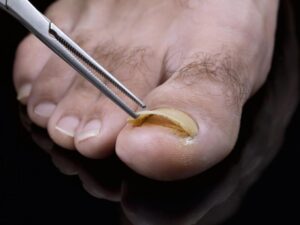
While some individuals do not think anything while looking down at their feet, there are millions of individuals around the globe who struggle with this view due to toenail fungus infection.This condition changes the texture and appearance of the nail, turning it thick, brittle, uneven, and yellow. Less commonly, the nail can become distorted, weak, and separated from the nail bed, creating an unappealing appearance and uncomfortability.
When encountering this problem, the immediate reaction is often to seek a quick, private, and affordable solution. Today, a quick Google search would easily provide thousands upon thousands of do-it-yourself ideas. Some of the many examples include people soaking their feet in vinegar, applying essential oils, or using over-the-counter antifungal creams, hoping to tackle the problem discreetly.
Unfortunately, in most cases, the infection does not resolve. It lingers for months or even years. Despite consistent effort, the fungus continues to live beneath the nail, protected from surface-level treatments. This cycle traps many people into repeating home remedies that provide temporary cosmetic changes at best, but no true eradication of the infection.
Understanding why these approaches do not succeed requires learning and understanding both the biology of the nail and the behavior of fungal infections, as well as how medical lasers approach the problem in a different way.
The Persistent Myth of At-Home Fungal Cures
The market for DIY toenail fungus treatments is substantial because many people prefer privacy and low cost over clinical evaluation. This has triggered a diverse plethora of home-based solutions that are spread across platforms on the internet, but rarely supported by clinical evidence.
Through an extended period of time, these remedies are perpetually spread through anecdotal reports and social media pages, even though scientific verification is often lacking. What is often perceived as improvement is usually a temporary bandaid or natural nail growth that occurs without the treatment being used.
DIY Solutions: Why the First Instinct
Several factors explain why home remedies remain popular:
Affordability: Many DIY treatments use inexpensive household items such as vinegar, baking soda, or essential oils.
Convenience: These products are already available at home and do not require professional intervention.
Privacy: Part of what makes at home treatments appealing is that they can be done in the comfort of your own home, away from the public eye
Marketing influence: Many over-the-counter products rely on strong claims suggesting fast and obvious results.
Despite these motivations, they do not reflect how fungal infections behave biologically or structurally within the nail.
Why DIY Toenail Fungus Remedies Fail
Toenail fungus, known medically as onychomycosis, does not remain on the surface of the nail. It extends beneath the nail plate into the nail bed and can persist in deeper layers where it feeds on keratin.
The key limitation of most home treatments is not the absence of antifungal ingredients, but the inability of those ingredients to reach the infected tissue at effective concentrations.
Most topical or household remedies are unable to reach the actual fungus, as it is obstructed by the nail’s physical structure.
The Keratin Shield: Anatomy of the Nail Plate
Toenails are composed of tightly packed keratin layers. This structure creates a dense, protective barrier designed to shield the toe from trauma and environmental factors.
While biologically beneficial, this barrier does not allow treatment effectiveness.
The nail plate is:
- Dense and compact
- Poorly permeable to liquids
- Structurally layered and hardened
- Resistant to absorption
Ultimately because of these reasons, most topical solutions remain on the surface and do not reach the fungal colonies beneath the nail.
Even with temporary improvement in appearance, it does not actually fully eliminate the infection.
Common DIY Methods and Their Limitations
Tea Tree Oil and Essential Oils
It is common for tea tree oils to be promoted and marketed with the claim that it has antifungal properties. While laboratory studies show some inhibitory effects on fungi, real-world use is limited by poor penetration through the nail plate.
Vinegar Soaks
The acetic acid in vinegar soaks may alter surface conditions, but soaking does not consistently deliver the acid to deeper fungal layers. Any effect is typically superficial and temporary.
Over-the-Counter Antifungal Creams
These products are generally designed for skin infections such as athlete’s foot. They are not formulated to penetrate thick nail structures.
Vapor Rubs and Home Mixtures
Menthol, eucalyptus, and camphor-based products may soften the nail or temporarily change its appearance, but they do not eliminate the fungal infection beneath the surface.
Across all of these approaches, the core limitation remains the same: insufficient penetration into the infected area.
The Hidden Cost of Delaying Effective Treatment
Toenail fungus is a progressive condition. Without effective intervention, it tends to worsen over time rather than improve.
Possible progression includes:
- Thickening and distortion of the nail
- Increased discoloration and brittleness
- Spread to additional nails
- Discomfort in footwear
- Greater resistance over time due to chronic infection
In some cases, untreated fungal infections may also contribute to secondary skin issues or spread through shared environments such as showers, floors, or footwear.
What begins as a cosmetic issue can become a long-term structural nail problem.
The Science Behind Laser-Based Treatment
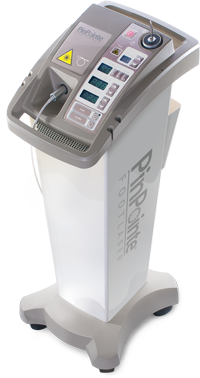
Laser-based systems approach toenail fungus differently from topical treatments by bypassing the nail surface entirely.
These systems use specific wavelengths of light energy designed to pass through the nail plate and interact with the infection beneath it.
Instead of relying on absorption through the surface, laser energy targets the deeper environment where fungal colonies reside.
1. 1064-nm Wavelength Penetration
A commonly used wavelength in medical laser systems is 1064 nanometers. This wavelength is able to pass through the keratin structure of the nail with minimal absorption.
This allows energy to reach the nail bed where fungal organisms exist, rather than being blocked at the surface.
2. Thermal Interaction with Fungal Cells
Once the energy reaches the infected area, it is absorbed more readily by fungal structures than by surrounding healthy tissue.
This leads to localized heating within the fungal cells, which disrupts their internal structure and reduces their ability to survive and reproduce.
Surrounding tissue remains largely unaffected due to differences in absorption characteristics.
3. Micro-Pulse Energy Delivery
Instead of continuous heating, laser systems deliver energy in rapid micro-pulses.
This approach:
- Prevents excessive heat buildup
- Allows cooling between pulses
- Enhances safety for surrounding tissue
- Improves overall tolerability
This controlled delivery is a key reason the procedure is generally well tolerated.
Clinical Outcomes Compared to DIY Methods
Clinical observations suggest that laser-treated nails often show gradual improvement over time as new, healthier nail growth replaces infected tissue.
Because toenails grow slowly, visible changes typically occur over several months rather than immediately.
Unlike DIY treatments, which depend on repeated daily application, laser-based approaches target the infection directly at its source.

Limitations of At-Home Laser Devices
Consumer-grade devices marketed for home use differ significantly from clinical laser systems.
Lower Energy Output
Many at-home devices do not generate sufficient energy to reach the deeper nail bed where infection resides.
Limited Precision
Clinical systems use carefully calibrated pulse timing, which is often absent in consumer devices.
Inconsistent Performance
Without medical-grade engineering, results vary widely and are often minimal.
Safety Constraints
Improper energy delivery may result in superficial heating without meaningful impact on the infection.
What Happens During a Laser-Based Procedure
A typical laser session follows a structured clinical process.
Evaluation
The nail is assessed to confirm fungal involvement and determine severity.
Preparation
In some cases, the nail may be lightly reduced in thickness to improve energy penetration.
Treatment
Laser energy is applied systematically across the nail in a controlled pattern.
Aftercare Guidance
General hygiene and environmental control measures are typically recommended to reduce reinfection risk.
The procedure is generally brief and does not require recovery time.
Why Toenail Fungus Is Difficult to Eliminate Naturally
Toenails grow slowly and create a protected environment for fungal survival. Unlike skin, which sheds regularly, nails trap infection beneath a hard, protective barrier.
This allows the fungus to persist for long periods without being exposed to immune defenses or external treatments.
Because of this environment, spontaneous resolution is uncommon.
Preventing Reinfection
Even after successful treatment, reinfection can occur if environmental factors are not controlled.
Common preventive practices include:
- Keeping feet dry and clean
- Wearing breathable footwear
- Avoiding barefoot exposure in shared damp areas
- Regularly changing socks
- Maintaining nail hygiene
These steps help reduce the likelihood of recurrence.
Final Perspective: Understanding the Structural Barrier
The fundamental difference between DIY remedies and laser-based approaches lies in access.
Topical treatments act on the surface of the nail, while fungal infections exist beneath it. This structural mismatch is the primary reason most home remedies fail.
Laser technology addresses this limitation by delivering energy beyond the nail plate directly into the infected environment.
Understanding this distinction explains why toenail fungus is persistent and why surface-level treatments are often insufficient for resolving it.