A Background on Fungal Organisms
Persistent fungal infection of the nail affects millions of individuals worldwide and is medically known as onychomycosis. Far from being only a cosmetic problem, it is a medical condition that can get increasingly worse. This condition typically requires a thorough understanding of its biological mechanisms, transmission pathways, and available clinical interventions. The causal pathogens can compromise the structural integrity of the nail and migrate to the cutaneous tissues close by. Then, spread to other individuals within shared living environments without effective management.
Effectively managing this condition requires an exploration of how fungal organisms colonize the nail, the environmental and physiological factors that increase the rate of their spread, practical preventative protocols, and the scientific principles behind advanced targeted therapies, specifically medical laser technology.
- The Pathophysiology of Toenail Fungus
To understand how the infection spreads, one must examine the specific pathogens responsible for onychomycosis and how they interact with human anatomy.
The Biological Mechanism of Toenail Fungal Infections
Toenail fungal infections, known clinically as onychomycosis, occur when microscopic pathogens invade the nail plate, nail bed, or nail matrix. The human nail is primarily composed of keratin. Keratin is a dense and highly resilient structural protein that provides a protective barrier. To successfully colonize this environment, an invading microorganism must possess specialized biological mechanisms capable of bypassing or degrading this tough protein barrier. Based on their structural characteristics and behavior, the pathogens responsible for these infections fall into three distinct categories.
Three Categories of Pathogens
When infections are not caused by dermatophytes, they are typically driven by non-dermatophyte molds or yeasts, which operate under different biological rules. Non-dermatophyte molds, including species from the Aspergillus and Fusarium genera, are opportunistic environmental organisms that generally lack the ability to penetrate healthy, intact nails. Instead, they exploit pre-existing structural damage, such as physical trauma to the toe or prior damage from a dermatophyte infection, to establish themselves in the weakened nail tissue. Fusarium is particularly challenging in clinical settings due to its high resistance to standard antifungal treatments.
Yeasts, primarily Candida albicans, represent a third category of infection. Because yeasts cannot easily digest hard keratin on their own, they rely heavily on chronic moisture and humidity to soften the surrounding skin and nail apparatus. Consequently, Candida infections often manifest alongside significant inflammation, redness, and swelling of the surrounding skin folds, a condition known as paronychia. Differentiating between these specific types of organisms through laboratory testing is vital for effective medical management, as standard therapies designed to eradicate dermatophytes often fail when applied to non-dermatophyte molds or yeast infections.
Mechanism of Infection
Dermatophytes secrete enzymes known as keratinases. These specialized proteins digest keratin, the tough structural protein that constitutes the primary component of human nails, hair, and the outer layer of the skin.
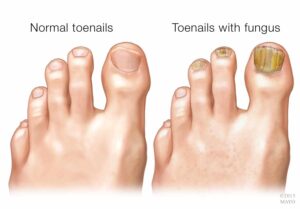
The infection typically starts at the distant or side edges of the nail bed, slowly migrating upward underneath the nail plate. This clinical manifestation is known as distal subungual onychomycosis. As the organisms proliferate, they disrupt the cellular architecture of the nail plate, leading to classic diagnostics:
- Discoloration: The nail shifts from translucent to white, yellow, or deep brown as fungal debris accumulates beneath the plate.
- Hyperkeratosis: The nail bed overproduces skin cells in response to the chronic irritation, causing the nail to thicken significantly.
- Structural Brittleness: As the internal matrix of keratin fibers is consumed by the fungi, the nail loses its structural integrity. It becomes fragile, brittle, and prone to crumbling or cracking.
- Onycholysis: The accumulation of subungual debris can lift the nail plate physically away from the underlying vascularized nail bed. This separation creates a secondary pocket that traps moisture, dark debris, and anaerobic bacteria, making the localized infection even worse.
- Transmission: How the Fungus Spreads
A common misconception is that a fungal nail infection remains once and for all isolated to a single digit. In reality, onychomycosis is a highly transmissible infectious condition. The microscopic fungal spores produced by dermatophytes are resilient, remaining viable and infectious in the environment for extended amounts of time.
Autoinoculation: Spreading to Other Digits
Autoinoculation occurs when an individual inadvertently transfers the fungal pathogens from the primary site of infection to uninfected areas of their own body. Because the hands are continuously used to touch, wash, and trim the feet, the risk of cross-contamination is exceptionally high.
- Adjacent Toes: Fungi migrate laterally across, particularly if the toes tightly compress against one another inside footwear, creating a friction-induced micro-abrasion that allows spores to enter the skin or nail matrix.
- Tinea Pedis (Athlete’s Foot): The fungi responsible for onychomycosis readily spread from the nail bed to the surrounding skin of the foot, especially the interdigital webs between the toes and the plantar surfaces. This creates a cyclical infection loop: athlete’s foot reinfects the nails, and infected nails continuously shed spores back onto the skin.
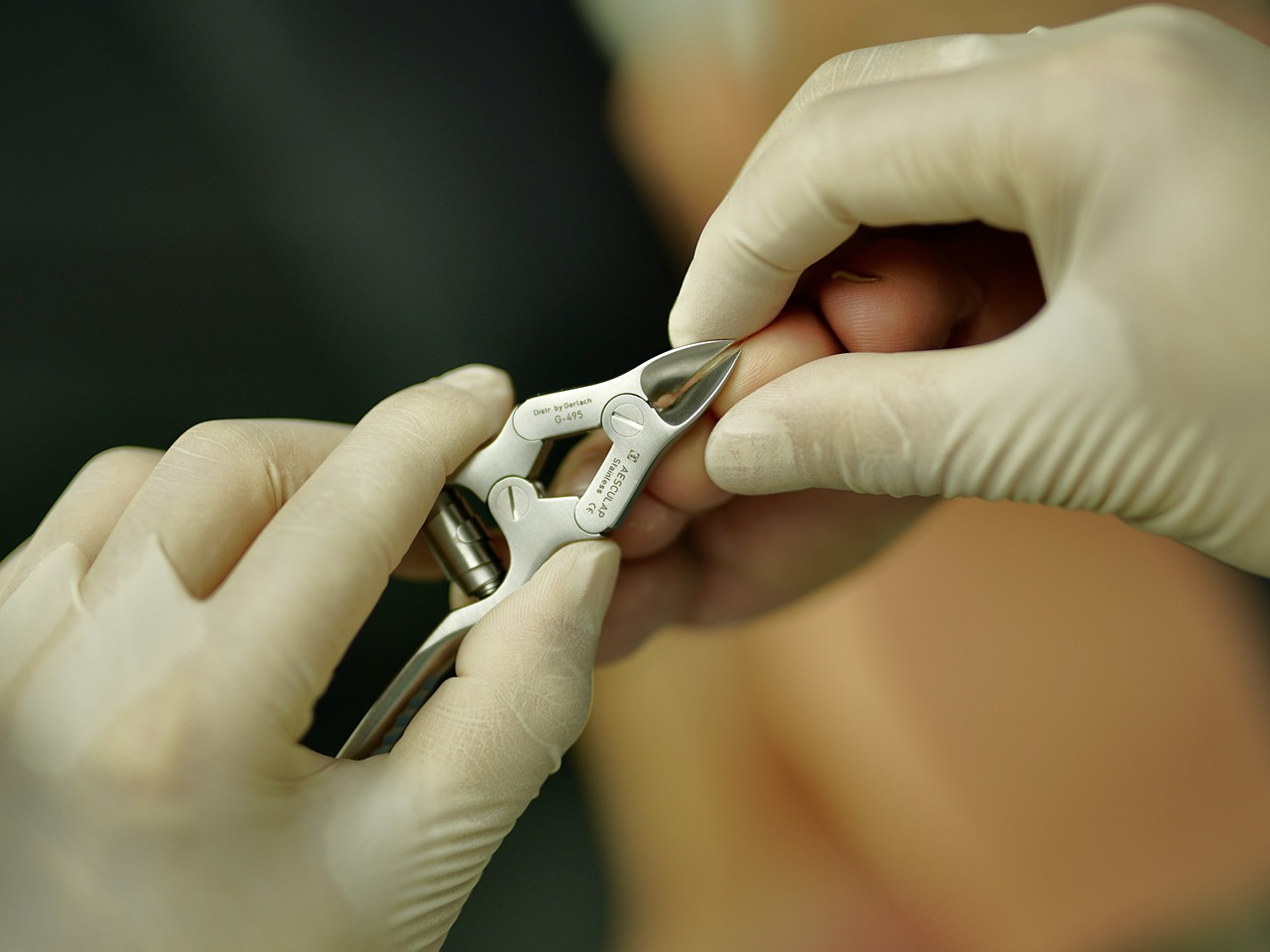
- Mani-Pedi Cross-Contamination: Utilizing the same grooming tools—such as nail clippers, emery boards, buffers, or cuticle pushers—on an infected toenail and subsequently on healthy toenails or fingernails directly implants fungal spores into healthy tissue.
Interpersonal Transmission: Spreading to Family and Friends
Fungal spores are shed continuously via microscopic skin flakes and nail fragments. In shared residential spaces or communal environments, these spores become silent propagators for infecting others.
- Direct Fomite Sharing: Sharing personal care items like towels, socks, shoes, or linen allows viable fungal elements to transfer directly from an infected individual to a healthy host. Shoes are particularly potent fomites because their dark, enclosed interiors preserve fungal viability.
- Environmental Accumulation in Shared Spaces: Bathmats, carpets, tiled bathroom floors, and the surfaces of showers or bathtubs serve as prime reservoirs for shed spores. When an uninfected family member walks barefoot across these surfaces, the spores adhere to their skin, waiting for an opportunity to colonize.
- Public and Communal Environments: Damp environments with high foot traffic provide ideal conditions for transmission outside the home. Gym locker rooms, public swimming pool decks, communal showers, and commercial nail salons with improper sterilization protocols are primary acquisition sites.
- Environmental and Physiological Risk Factors
While exposure to fungal spores is common, the development of a clinical infection depends on environmental conditions and individual physiological vulnerability.
Environmental Catalysts
Dermatophytes are ectothermic organisms that thrive best in specific microclimates:
- High Humidity and Moisture: Prolonged exposure to moisture softens the skin and nail plate (maceration), making it easier for fungal hyphae to penetrate.
- Elevated Temperature: Warm environments accelerate fungal metabolic activity and reproduction rates.
- Occlusive Footwear: Non-breathable shoes made of synthetic materials, combined with socks that retain sweat, trap metabolic heat and moisture. This creates an ideal incubator for fungal proliferation.
Physiological and Systemic Vulnerabilities
Certain underlying health profiles compromise the body’s natural defenses against superficial fungal invasions:
- Diabetes Mellitus: Elevated systemic glucose levels enrich the tissue environment for fungal growth, while peripheral neuropathy diminishes sensory awareness of minor nail traumas.
- Peripheral Arterial Disease (PAD): Reduced arterial blood flow to the lower extremities limits the delivery of essential immune cells and oxygen, slowing down nail growth and repair.
- Immunosuppression: Deficiencies in T-cell mediated immunity (due to HIV, chemotherapy, or immunosuppressive medications) prevent the body from eradicating early-stage fungal colonization.
- Advanced Age: Natural aging slows down the rate of nail plate growth. This allows slow-growing fungal hyphae to outpace the outward movement of the nail, establishing a deep-seated infection.
- Comprehensive Preventative and Hygiene Protocols
Preventing the acquisition or further spread of onychomycosis requires a multi-tiered approach centered on consistent and thorough hygiene, environment modification, and tool sanitization.
Daily Foot Hygiene
- Dedicated Feet Washing: Wash feet daily using soap and warm water. Pay deliberate attention to the spaces between the toes, where moisture easily builds up.
- Absolute Desiccation: After bathing, dry the feet completely using a clean towel. Ensure no moisture remains between the digits before putting on footwear.
- Zonal Towel Use: Use a separate towel dedicated exclusively to drying infected feet to prevent cross-contaminating other areas of the body.
Footwear Management
- Moisture-Wicking Textiles: Opt for socks fabricated from synthetic blends designed to pull moisture away from the skin (such as acrylic or merino wool) rather than cotton, which absorbs and holds sweat.
- Footwear Rotation: Avoid wearing the same pair of shoes two days in a row. Allow footwear at least 24 to 48 hours to air out and completely dry inside.
- Antifungal Decontamination: Once in a while, treat the interior of footwear with ultraviolet (UV) shoe sanitizers or medical-grade antifungal powders/sprays to eliminate latent spores. Latent spores are structures produced by bacteria and fungi that are dormant, highly resilient, and metabolically inactive.
- Barrier Protection: Always wear protective shower shoes, sandals, or flip-flops when navigating public pools, gym locker rooms, and communal bathing areas.
Grooming Tool Disinfection
- Strict Separation: Never use the same clippers or files on infected and healthy nails.
- Chemical Sterilization: Decontaminate metal grooming implements after every single use. Soak them in a solution of high-concentration isopropyl alcohol (70% or greater) or a hospital-grade disinfectant solution for a minimum of 20 minutes.
- Proper Discarding: Safely dispose of non-porous single-use items, like emery boards, immediately after they come into contact with an infected nail.
- Medical Interventions: The Evolution of Onychomycosis Treatments
When a fungal infection establishes itself deep within the nail apparatus, topical hygiene measures alone are rarely sufficient to eradicate it. Overcoming the physical barrier of the nail plate requires advanced clinical intervention. Traditional modalities exhibit distinct therapeutic limitations, which has driven the adoption of modern laser technologies.
Limitations of Traditional Therapies
- Topical Antifungal Agents: Creams, lacquers, and solutions must be applied daily for up to a year. However, the human nail plate is dense and highly resistant to molecular penetration. Consequently, the active chemical compounds often fail to reach the deep nail bed and matrix in therapeutic concentrations, leading to high clinical failure and recurrence rates.
- Oral Antifungal Medications: Systemic drugs, such as terbinafine or itraconazole, travel through the bloodstream directly to the growing nail matrix. While more effective than topicals, they carry significant risks of systemic side effects. These include drug-to-drug interactions and potential hepatotoxicity (liver injury). Patients often must undergo periodic blood draws to monitor liver enzyme levels throughout the course of treatment, making this unsuitable for individuals with pre-existing hepatic impairment or complex medication routines.

- The Science of Medical Laser Therapy for Nails
Laser therapy represents a significant advancement in podiatric medicine. It provides a targeted, non-systemic approach to eliminating onychomycosis without the metabolic burdens of oral medications or the poor absorption rates of topical lacquers.
Principles of Selective Photothermolysis
The underlying mechanism of laser nail therapy rests on the principle of selective photothermolysis. This process utilizes specific wavelengths of light to target and destroy abnormal tissues without damaging the surrounding healthy structures.
Medical lasers developed for onychomycosis typically operate in the near-infrared spectrum, commonly using wavelengths such as 1064 nm (Nd:YAG lasers). This specific wavelength possesses physical properties that allow it to pass through the hard, dense keratin of the nail plate without being absorbed or deflected.
As the laser energy penetrates into the subungual space, it is selectively absorbed by pigment molecules (chromophores) and cellular structures within the fungal hyphae and spores.
Thermal Eradication of Fungal Structures
When the fungal pathogens absorb the concentrated laser energy, that light is instantly converted into thermal energy (heat). Fungal cells are highly sensitive to thermal stress.
- Denaturation: Raising the temperature of the target micro-environment to a specific therapeutic window (typically between 45°C and 50°C) denatures the essential proteins and enzymes within the fungus.
- Cellular Death: This sustained heat destabilizes the fungal cell membranes and deactivates their metabolic machinery, resulting in the destruction of both active vegetative hyphae and dormant reproductive spores.
- Tissue Preservation: Because the laser is applied in brief, controlled pulses or continuously monitored sweeps, the thermal energy dissolves quickly from healthy human tissue. This approach prevents thermal damage to the vascularized nail bed, surrounding skin, and the delicate nail matrix responsible for generating new nail cells.
Clinical Progress and Expectations
Dermatophytes are the primary causative agents in the vast majority of cases because they are uniquely adapted to feed on human tissue. Unlike standard environmental molds, these specialized fungi secrete a group of enzymes called keratinases, which chemically digest the nail’s hard keratin matrix into absorbable nutrients. The most prevalent species worldwide is Trichophyton rubrum, a highly resilient pathogen that typically enters from the edge of the nail and moves down into the nail bed, establishing a chronic, slow-moving infection that cleverly evades the body’s local immune response. A closely related species, Trichophyton mentagrophytes, presents a more aggressive and inflammatory profile, often attacking the superficial top layer of the nail plate directly and leaving a chalky, brittle texture.
It is critical to understand that laser nail treatment does not instantly clear the physical discoloration or deformities of an infected nail. The damaged, hyperkeratotic keratin cannot be altered back to a clear state in a snap of a finger.
Instead, the laser neutralizes the live pathogens, pausing the worsening of the infection. True clinical clearance becomes visible only as the digit undergoes its natural growth cycle. Healthy, uninfected nail tissue begins to emerge from the proximal nail fold (the base of the nail), gradually urging the old, damaged, dead fungal fragments outward.
On average, healthy toenails grow at a rate of approximately 1 to 1.5 millimeters per month, full clearance of a severely involved big toenail typically takes anywhere from 9 to 12 months post-treatment.